
Are you trying to budget for a link building campaign and wondering about the real costs involved with a private blog network (PBN)? Understanding the full financial picture is crucial before you invest, as the expenses go far beyond just buying a link. The total cost involves acquiring domains, setting up hosting, creating content, and performing ongoing maintenance.
The PBN link building cost in 2026 can vary dramatically, ranging from as little as $100 per domain for a low-tier setup to well over $1,500 for a single high-authority site. This price depends on domain quality, hosting choices, and content strategy. A cheap setup might seem appealing, but it often carries significant risks that can devalue your entire investment and even harm your main website's search rankings.
PBN link building is an SEO strategy that involves creating a network of authoritative websites to build backlinks to your primary money site. These networks are built using expired or auctioned domains that already have established authority and a history of backlinks. The core idea is to leverage the pre-existing link equity of these domains to pass ranking power to your target website, theoretically speeding up the process of improving search engine rankings.
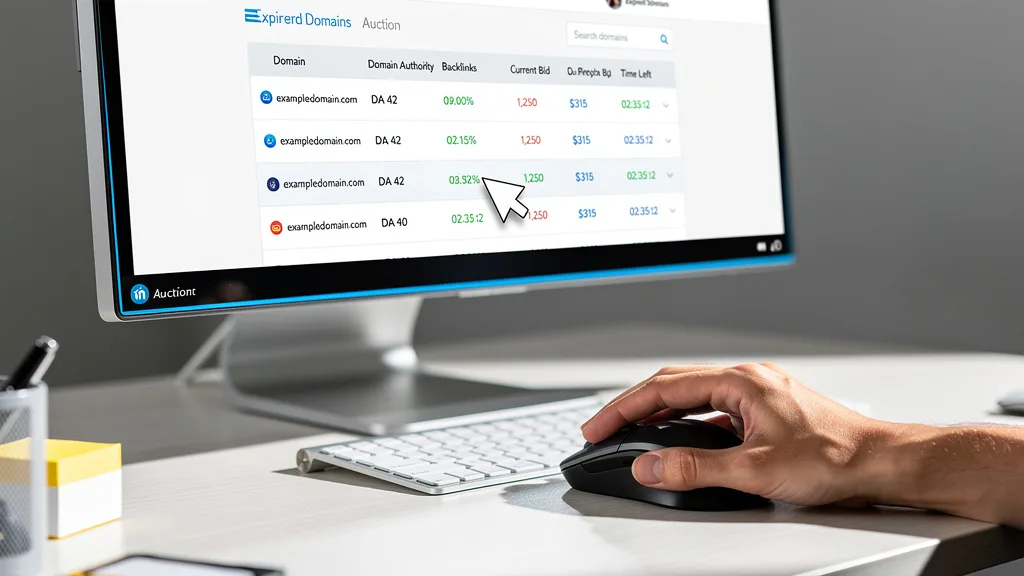
When you acquire an expired domain, you essentially inherit its backlink profile. By publishing new, relevant content on this domain with a link pointing to your money site, you control the flow of that authority. While this can provide a powerful and direct way to influence your site's backlink profile, it is considered a high-risk tactic that violates Google's webmaster guidelines. Success requires careful management to avoid detection and potential penalties.
PBN Link Building Cost Breakdown for 2026
To accurately budget for a PBN, you must account for several distinct costs that add up over time. These expenses can be broken down into four main categories: domain acquisition, hosting and setup, content creation, and ongoing maintenance. Neglecting any of these areas can compromise the effectiveness and safety of your network.
Expired Domain Acquisition Costs
The single biggest variable in your PBN budget is the cost of acquiring expired domains. Prices are determined by the domain's authority, backlink profile, and niche relevance. You can find low-tier domains with minimal authority for as little as $50 to $100. However, high-quality domains with strong metrics (like a high Domain Rating) and a clean history can cost anywhere from $500 to several thousand dollars at auction or from a broker. This initial investment sets the foundation for your network's power.

When purchasing domains, you'll use platforms like GoDaddy Auctions, DropCatch, or specialized brokers. The competition for valuable domains is fierce, which often drives up prices. Remember that a higher upfront cost for a quality domain is often a better long-term investment than buying multiple cheap, low-power domains that offer minimal SEO benefit.
PBN Hosting and Setup Fees
Once you acquire a domain, you need to host it. To avoid creating detectable footprints, each site in your PBN should have unique hosting. Using the same cheap shared hosting account for all your domains is a major red flag for search engines. Specialized PBN hosting services offer solutions that provide unique IP addresses and server locations for each site, which is crucial for network safety.
These services typically charge on a per-site basis. You can find reliable PBN Hosting Prices & Packages that range from $2 to $5 per month per website. While this may seem small, it adds up quickly as your network grows. For a network of 20 sites, you could be paying $40 to $100 per month just for hosting, in addition to any one-time setup fees.
Content Creation and Publishing Expenses
A PBN site with no content or low-quality spun articles is another major footprint that can get your network devalued. To make your PBN sites appear legitimate, each one needs unique, readable, and relevant content. The cost of this content can vary significantly based on quality. You might pay as little as $15-$25 for a basic 500-word article from a budget writer.
However, for content that can pass a manual review and genuinely adds some value, you should expect to pay $50 to $100 or more per article. This content needs to be well-written and topically aligned with the domain's original niche to maintain its perceived authority. This recurring expense is necessary for every site you add to your network.
Ongoing Network Management and Maintenance
Building a PBN is not a one-time task. Your network requires continuous management to remain effective and secure. This includes annual domain renewal fees, which typically cost between $10 and $20 per domain per year. Additionally, you need to account for the time or money spent on keeping WordPress sites updated, managing plugins, and ensuring there are no security vulnerabilities.
If you are not managing the network yourself, you will need to pay for a service or a virtual assistant, which adds to the monthly operational cost. These maintenance tasks are critical for protecting your investment and ensuring the long-term stability of your PBN. Overlooking them can lead to hacked sites or expired domains, rendering your initial investment worthless.
| Cost Component | Low-Tier Estimate | High-Tier Estimate | Frequency |
|---|---|---|---|
| Expired Domain Acquisition | $50 - $150 | $500 - $2,000+ | One-Time |
| PBN Hosting & Setup | $2 - $3 / month | $4 - $6 / month | Monthly |
| Content Creation (per article) | $20 - $40 | $75 - $150+ | One-Time (per site) |
| Domain Renewal | $15 / year | $20 / year | Annually |
| Total Year 1 Cost (Per Site) | $109+ | $643 - $2,242+ | Combined |
Key Factors That Drive Cost Differences
Not all PBN domains are created equal, and the price you pay is directly tied to a few key quality indicators. Understanding what drives cost differences helps you make smarter investment decisions and avoid overpaying for domains that won't deliver results.
Domain Authority and Backlink Profile Quality
The most significant cost driver is the strength of a domain's backlink profile. Domains with backlinks from high-authority sources like news publications, universities, or established industry websites are far more valuable. Metrics like Ahrefs' Domain Rating (DR) or Moz's Domain Authority (DA) are often used as a proxy for this quality. A domain with a DR of 40 will be exponentially more expensive than one with a DR of 10. You are essentially paying for the power and trust that these existing backlinks provide. Reviewing backlink pricing structures for legitimate links can give you a baseline for what authority costs.

A strong backlink profile means the domain has more link equity to pass to your money site. Investing in domains with powerful, clean backlink profiles is the primary reason for building a PBN in the first place. Therefore, this is where the majority of your budget for high-impact links should be allocated.
Niche Relevance and Topical Trust
A domain that is topically relevant to your money site's niche is significantly more valuable than a generic one. For example, if you run a finance blog, a link from an expired financial news domain will be more powerful and look more natural than a link from a former pet grooming blog. This concept is known as topical trust or relevance.
Search engines want to see topically relevant links, as they are a stronger signal of authority and expertise. As a result, niche-specific domains command a premium price. Building a network of domains all relevant to your industry, such as for the finance and crypto sectors, creates a much more powerful and defensible asset, but it also increases the overall building cost.
Domain Age and History
The age and history of a domain also play a crucial role in its valuation. An older domain that has been continuously indexed by Google for years is generally seen as more trustworthy than a newly registered one. However, age alone is not enough. You must also investigate its history using tools like the Wayback Machine to ensure it was never used for spam, adult content, or other questionable activities.
A clean, consistent history adds to a domain's value. Domains that have been dropped and re-registered multiple times or have a history of spam are less valuable and can even carry risks. A thorough vetting process is essential to ensure you are paying for a genuinely authoritative asset, not someone else's old penalty.
The Hidden Risks and Financial Downsides of PBNs
While PBNs can offer a shortcut to better rankings, they come with substantial hidden risks that can lead to significant financial loss. Before investing, you must weigh the potential rewards against the very real possibility of penalties and network devaluation.
Potential for Google Penalties
The biggest risk associated with PBNs is a manual or algorithmic penalty from Google. PBNs are a direct violation of Google's Webmaster Guidelines, which prohibit participation in link schemes. If Google detects your network, it can de-index all your PBN sites, making them worthless. Even worse, it can apply a penalty to your money site, causing a catastrophic drop in traffic and revenue. This makes the entire investment in domains, hosting, and content a total loss.

These penalties can be difficult and time-consuming to recover from, often requiring a full disavowal of the links you paid to build. The potential for a penalty means that any gains you achieve with a PBN are inherently unstable and could disappear overnight.
Why Cheap Links Often Waste Money
The allure of cheap PBN links is strong, but they are almost always a poor investment. When you see services offering PBN links for $10 or $20, it's a sign of a low-quality, public network. These networks are built on weak domains, use spun or garbage content, and have massive, easily detectable footprints. In short, cheap links waste money because they provide little to no SEO value and have a very high risk of being part of a network that will eventually be penalized.
"Investing in cheap, low-quality PBN links in 2026 is like throwing money into a fire. They offer no long-term value and expose your primary asset, your money site, to unnecessary risk. A single high-quality, relevant link is worth more than a hundred spammy ones."
These links are often sold to hundreds of other websites, further diluting their value and increasing the risk of detection. Your budget is far better spent on fewer, higher-quality links from reputable sources than on a large volume of toxic links that could harm your site.
Footprint Detection and Network Devaluation
The key to running a PBN successfully is to avoid leaving footprints that connect the sites to each other or to you. Common footprints include using the same hosting provider, IP address, domain registrar, WordPress theme, or set of plugins across multiple sites. Advanced SEOs and search engines are adept at identifying these patterns.
Once a footprint is identified, the entire network can be flagged and devalued. This means that all the time and money you invested in building the network is lost instantly. As link detection algorithms become more sophisticated, the effort and cost required to maintain a truly footprint-free network continue to rise, making it an increasingly difficult strategy to execute safely.
PBNs vs. Safer Link Building Alternatives
Given the high costs and risks of PBNs, many SEOs are turning to safer, more sustainable link building strategies. While PBNs offer control, alternatives provide long-term value without the constant threat of penalties. Understanding the difference is key to developing a resilient SEO strategy.
The High-Risk PBN Approach
The PBN approach is defined by control and risk. You own the assets, so you can control the anchor text, the placement of the link, and ensure it remains live. This level of control is appealing, but it comes at the cost of constant vigilance, high expenses, and the ever-present risk of a penalty that could undo all your hard work. It's a high-stakes strategy that is best suited for aggressive campaigns where the potential rewards are deemed worth the considerable risks.
For most businesses, especially those focused on building a long-term, sustainable brand, the instability of a risky PBN strategy is a major drawback. The resources required to build and maintain a safe network are substantial, and a single mistake can have severe consequences for your primary business website.
Modern Outreach for Editorial Links
A much safer alternative is earning links through genuine outreach. This involves creating high-quality content and promoting it to relevant bloggers, journalists, and webmasters in your niche. When they link to your content because it provides value to their audience, you earn a powerful, editorially given backlink. These links are the gold standard in SEO and are fully compliant with Google's guidelines.
While outreach requires significant effort in content creation and relationship building, the resulting links are far more durable and valuable than any PBN link. Professional link building services often focus on this method because it builds brand authority and delivers stable, long-term ranking improvements without the associated risks of PBNs.
Curated Link Insertions and Editable Backlinks
Another effective and safer alternative is securing curated link insertions, also known as niche edits. This strategy involves finding existing, relevant articles on authoritative websites and requesting the addition of a link to your content where it adds value. These are sometimes called editable backlinks because you are editing an existing page rather than publishing a new one.
This approach combines the relevance of guest posting with the power of linking from an already aged and indexed page. It's often more scalable and cost-effective than traditional guest posting. A deep dive into niche edits vs guest posts shows that both can be powerful, but niche edits often provide a faster path to authority by leveraging existing content.
How to Calculate Your Campaign Budget
Calculating your PBN campaign budget requires a clear understanding of your goals and risk tolerance. Start by defining the number of links you want to build and the quality tier you are targeting. A campaign focused on a few high-authority links will have a very different budget from one aiming for a larger volume of mid-tier links.
Use the cost breakdown provided earlier as a guide. For each link, you must budget for domain acquisition, content, and the first year of hosting. Multiply this per-site cost by the number of sites you plan to build to get your initial investment total. Don't forget to factor in ongoing annual costs for domain renewals and hosting for subsequent years. For a more structured approach, consider looking into monthly link building packages that offer predictable costs.
- Step 1: Define Your Goal: Determine the number of links you need and the desired authority level (e.g., 10 domains with DR 30+).
- Step 2: Estimate Acquisition Costs: Research the market rate for domains that meet your criteria. Budget between $300-$1,000+ per high-quality domain.
- Step 3: Add Content and Hosting Costs: Add approximately $100-$150 per site for quality content and initial hosting setup.
- Step 4: Calculate Total Initial Cost: Multiply the per-site cost by the number of domains. For 10 high-quality sites, this could be ($500 + $125) x 10 = $6,250.
- Step 5: Factor in Ongoing Maintenance: Budget for annual domain renewals and monthly hosting fees to maintain the network beyond the first year.
Key Takeaways
Navigating the costs and risks of PBN link building requires careful consideration. Here are the most important points to remember from this guide:
- Costs Are Highly Variable: The total PBN link building cost per domain in 2026 can range from around $100 to over $2,000, depending heavily on the quality of the expired domain.
- Quality Drives Price: The authority, backlink profile, and niche relevance of a domain are the biggest factors determining its price. High-quality domains are expensive but deliver more value.
- Hidden Costs Add Up: Don't forget to budget for essential ongoing expenses like specialized hosting, quality content creation, and annual domain renewals.
- Risks Are Significant: PBNs violate Google's guidelines and carry a real risk of penalties that can de-index your network and harm your money site, making your entire investment worthless.
- Safer Alternatives Exist: Strategies like editorial outreach and curated link insertions (niche edits) offer more sustainable, long-term SEO value without the inherent risks of PBNs.
Frequently Asked Questions
What is a fair price for an expired domain for a PBN?
A fair price for an expired domain in 2026 depends entirely on its quality. A low-tier domain with minimal authority might cost $50-$150. A mid-tier domain with decent metrics (e.g., DR 20-35) could range from $200 to $500. Premium, high-authority domains (DR 40+) with clean, relevant backlink profiles can easily cost $1,000 or more at auction.
How much does PBN hosting typically cost per site?
Specialized PBN hosting, which is designed to minimize footprints by providing unique IPs, typically costs between $2 and $5 per website per month. Using standard shared hosting is not recommended as it creates a significant risk. For a network of 50 sites, you should budget for $100 to $250 in monthly hosting fees alone.
Can cheap PBN links actually hurt your SEO?
Yes, absolutely. Cheap PBN links almost always come from low-quality, easily detectable public networks that are often flagged as spam. Acquiring links from these networks can associate your website with a bad neighborhood, leading to a Google penalty that causes your rankings and traffic to plummet. They are a high-risk, low-reward investment that can do more harm than good.
What is the difference between PBN links and guest posts?
The main difference is control versus editorial endorsement. With a PBN link, you own the website, giving you full control over the anchor text and placement. With a guest post, you are earning a link on someone else's website. A guest post link is an editorial endorsement from a third party, which is viewed by Google as a much more natural and trustworthy signal.
How often do you pay for domain renewal?
You must pay a domain renewal fee annually for every domain in your network. This fee is typically between $10 and $20 per year per domain, depending on the registrar and the top-level domain (.com, .net, .org). Failing to renew a domain means you lose the asset and the initial investment you made to acquire it.
Conclusion
Ultimately, understanding the PBN link building cost in 2026 is about more than just numbers; it's about weighing a high-risk, high-cost strategy against safer, more sustainable alternatives. While the allure of controlling your own link profile is strong, the true cost includes significant financial investment, continuous maintenance, and the constant threat of a catastrophic Google penalty. The initial expense of a quality domain is just the beginning of a long-term financial commitment.
The key takeaways are clear: cheap links are a waste of money, quality is expensive, and the risks are substantial. For every dollar spent on a PBN, you must consider the potential for that investment to become worthless overnight. This is why many experienced SEOs and businesses are shifting their budgets toward strategies like editorial outreach and curated niche edits, which build lasting authority without the sleepless nights.
Instead of navigating the murky and expensive waters of PBNs alone, consider a strategy built on transparency and long-term value. A professional assessment can help you understand where your budget is best spent to achieve stable, meaningful growth. If you're ready to build a powerful backlink profile without the risks of PBNs, let's talk about a safer path forward. Get a Link Plan.