Are those expensive high DR backlinks you just acquired actually boosting your rankings, or are they toxic assets waiting to trigger a penalty? In the competitive landscapes of finance, crypto, and iGaming, the quality of your backlink profile can make or break your entire SEO strategy. A high Domain Rating (DR) score is an attractive metric, but it's only the beginning of the story.
Verifying high DR backlinks involves a multi-step audit to confirm a link's true value. This process requires you to look beyond the surface-level metric and analyze the referring domain's topical relevance, organic traffic patterns, outbound link profile, and on-page context. A thorough check ensures the link provides real SEO authority and isn't a liability from a low-quality private blog network (PBN) or link farm.
Why Verifying High DR Backlinks Is Non-Negotiable
Relying solely on a Domain Rating (DR) score from tools like Ahrefs is a significant risk in 2026. While DR is a useful indicator of a website's overall backlink authority, it can be artificially inflated and does not guarantee quality or relevance. Failing to properly vet your links can lead to severe consequences, including wasted budgets on worthless links, negative impacts on your search rankings, and even manual penalties from Google for participating in link schemes.
The goal of link building is to acquire authoritative, relevant endorsements that drive rankings and referral traffic. A link from a high DR site that has no topical alignment with your business or shows signs of being part of a spam network offers no real value. Proper verification is the crucial process that separates a powerful, ranking-boosting asset from a costly mistake. It protects your investment and ensures your off-page SEO efforts contribute positively to your long-term growth.
Latest Link Quality Signals Google Uses in 2026
Google's algorithms have become increasingly sophisticated, prioritizing user experience and content value above all else. In 2026, the focus has shifted heavily towards signals that demonstrate genuine authority and trustworthiness. While DR is a third-party metric, Google's evaluation is based on a more holistic view of a link's context and the quality of the referring domain. The search engine is looking for endorsements that feel natural and helpful to the reader.
Key signals include topical relevance, the organic traffic of the linking page and domain, and the overall health of the site's link profile. A link from a page that receives consistent organic traffic is seen as more valuable because it indicates Google already trusts that content. Furthermore, Google analyzes the neighborhood of a website: if a site links out to spammy or low-quality pages, its own authority is diminished. Understanding these signals is essential for building a resilient and effective backlink profile.
The 7-Point Checklist to Verify High DR Backlinks
To ensure every link you build is a valuable asset, you need a systematic auditing process. This seven-point checklist provides a comprehensive framework for evaluating any potential backlink, moving beyond simple metrics to assess its true quality and safety. By following these steps, you can confidently identify powerful links and avoid those that could harm your site.
1. Assess Website Relevance and Topical Authority
The first and most critical check is for topical relevance. A backlink acts as a vote of confidence from one site to another, and that vote is strongest when it comes from a site within your niche or a closely related one. A link from a DR 80 website about pet grooming holds little value for a cryptocurrency exchange. Google's algorithms are designed to understand these connections, giving more weight to links from topically aligned sources. niche edits for finance crypto.

Evaluate the potential linking site's homepage, blog categories, and recent posts. Do they consistently cover topics relevant to your industry? A website that has established deep topical authority in a specific area passes on much more powerful signals than a generalist site. For example, a link from a dedicated financial news blog is ideal for a fintech company. This is a core principle we apply when building high DR links for finance sites.
2. Analyze the Referring Domain's Organic Traffic
A high DR is meaningless if the website receives no organic traffic from Google. Organic traffic is a direct indicator that Google trusts the site and finds its content valuable enough to show to searchers. A site with a high DR but zero or declining traffic is a major red flag, often suggesting its authority metrics have been manipulated or that it has been penalized.
Use tools like Ahrefs or Semrush to analyze the domain's organic traffic trends over the last year. You want to see a stable or, ideally, an upward trajectory. A sudden, sharp drop in traffic can indicate a recent Google penalty. A healthy traffic profile confirms that the site has a real audience and is in good standing with search engines, making its endorsement more valuable.
3. Check for Natural Link Placement and Context
How a link is placed within the content is a powerful quality signal. An editorially placed link, one that is naturally integrated into the flow of a relevant article, carries the most weight. It should add value to the reader, providing additional context or resources. This is why our niche edits and link insertion service focuses on placing links within aged, relevant content.
Be wary of links that are clearly forced or out of place. Links stuffed into author bios, hidden in footers, or placed on site-wide blogrolls are heavily devalued by Google compared to contextual body links. The content surrounding your link should be relevant to the page you are linking to. A naturally placed link feels like it belongs and serves a purpose for the reader, which is precisely what Google wants to see.
4. Evaluate the Outbound Link Profile of the Source Page
A website is judged by the company it keeps. Before acquiring a link, inspect the page's other outbound links. A page that links out to hundreds of different, unrelated websites is a sign of a low-quality resource or a paid link farm. This practice dilutes the authority passed through each link and can associate your site with a bad neighborhood.
"In 2026, link verification isn't just about the domain's authority; it's about the page's integrity. A page linking out to spammy casinos, crypto scams, and low-quality sites will devalue your link, regardless of the site's DR. You must audit the entire outbound link profile of the page to protect your investment."
The ideal source page will have a limited number of high-quality, relevant outbound links. Check where these links point. Are they directed to other authoritative sites in the niche? Or do they point to spammy, low-authority domains? Avoid acquiring links from pages that resemble a directory of paid links rather than a curated piece of content.
5. Investigate for Signs of a PBN or Link Farm
Private Blog Networks (PBNs) can be a powerful tool when managed correctly, but low-quality networks pose a significant risk. It's crucial to distinguish between a professionally managed network and a cheap, easily detectable link farm. Look for red flags such as generic, cookie-cutter website designs, stock photos used across multiple sites, and thin, poorly written content.
Other warning signs include hidden Whois information on all domains, hosting from known SEO hosting providers, or a portfolio of sites that all link out to spammy niches. A high-quality backlink provider will ensure their network has a clean footprint and that each site appears unique and legitimate. Understanding the difference between safe and risky networks is key, as we explore in our comparison of high DR backlinks vs PBN links.
6. Review the Anchor Text for Over-Optimization
Anchor text is the clickable text in a hyperlink, and it provides context to both users and search engines about the linked page. While it's important for your anchor text to be relevant, over-optimizing with exact-match keywords is a classic sign of a manipulative link scheme. A site's overall anchor text profile should look natural and diverse.
A natural profile includes a mix of branded anchors (e.g., "Kamaal SEO"), naked URLs (e.g., "www.kamaalseo.com"), generic anchors (e.g., "click here"), and partial-match or phrase-match keywords. When acquiring a new link, ensure the proposed anchor text fits naturally within the sentence and doesn't contribute to an aggressive, over-optimized profile for your own site.
7. Confirm the Link Is Indexed and Do-Follow
Finally, perform two technical checks. First, ensure the linking page is indexed by Google. You can do this by copying the page's URL and searching for it in Google using the `site:` operator (e.g., `site:example.com/your-linking-page`). If the page doesn't appear, a link from it is worthless as Google hasn't even registered its existence.
Second, verify that the link is "do-follow." A "do-follow" link passes authority, or "link juice," while a "no-follow" link includes a tag that tells search engines not to pass authority. You can check this by right-clicking the link in your browser, selecting "Inspect," and looking at the HTML code. If you see `rel="nofollow"` or similar attributes like `rel="sponsored"`, the link will not pass SEO authority. For any paid link building effort, you should expect a do-follow link.
What Are the Best Backlink Audit Tools for 2026?
Manually verifying every backlink signal is nearly impossible without the right software. Professional SEOs rely on a suite of powerful tools to analyze backlink profiles, assess domain quality, and monitor traffic trends. As of 2026, three platforms dominate the market for backlink analysis: Ahrefs, Semrush, and Moz. These tools provide the essential data needed to execute the 7-point checklist effectively.
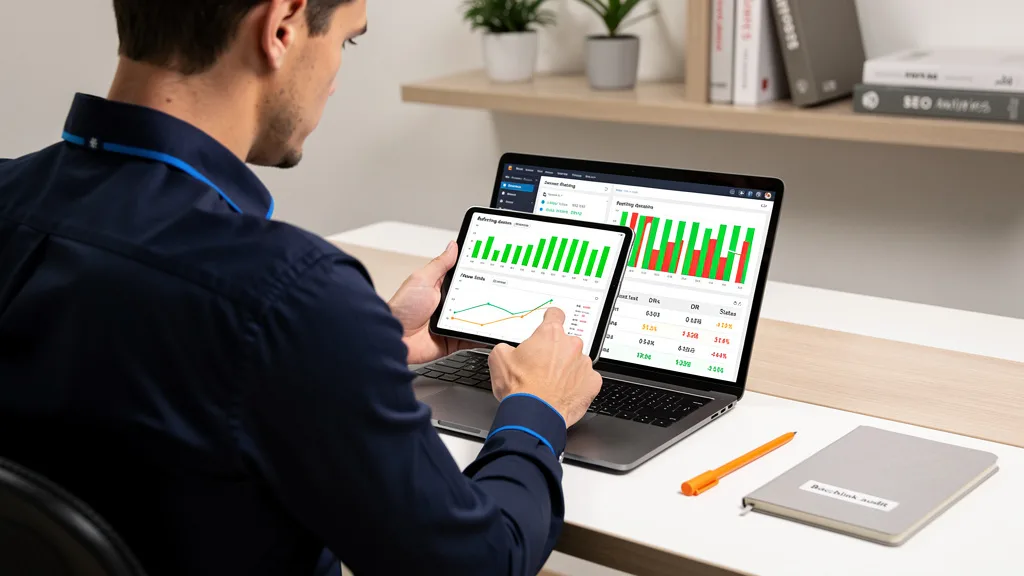
Each tool offers a unique set of features, strengths, and proprietary metrics, but all provide the core functionality required for a deep link audit. This includes a comprehensive backlink index, domain authority scores, organic traffic estimations, and anchor text analysis. Choosing the right tool often depends on your specific workflow, budget, and whether you need an all-in-one SEO platform or a specialized backlink analysis machine.
| Feature | Ahrefs | Semrush | Moz |
|---|---|---|---|
| Primary Metric | Domain Rating (DR) | Authority Score (AS) | Domain Authority (DA) |
| Backlink Index Size | Largest and fastest | Very large, growing fast | Smaller, but established |
| Best For | Deep backlink data analysis | All-in-one SEO suite | Link authority and spam analysis |
| Key Feature | Site Explorer, Content Gaps | Backlink Audit Tool, Domain Analytics | Link Explorer, Spam Score |
Free Alternatives for Basic Backlink Analysis
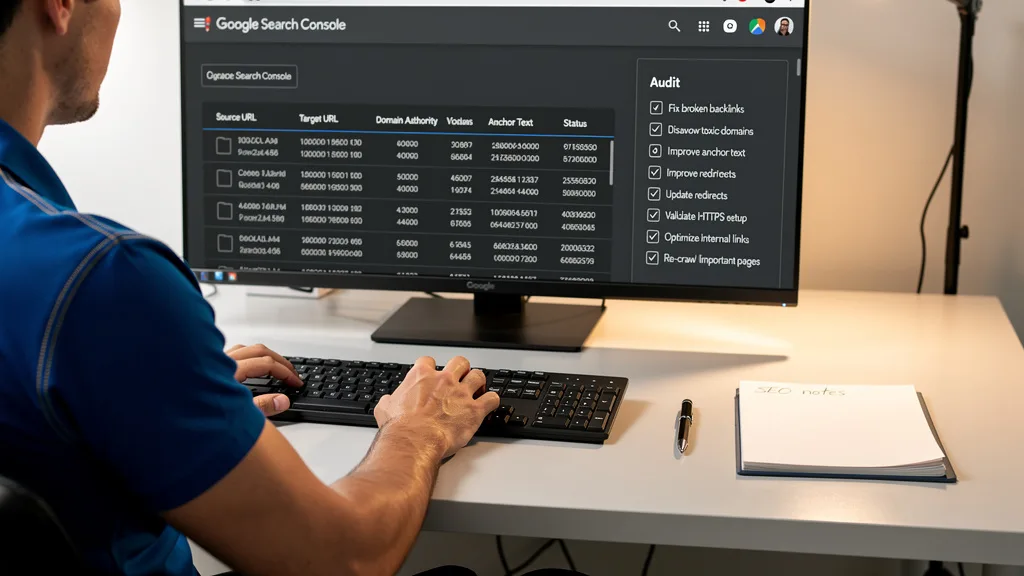
While the premium tools offer the most comprehensive data, there are free options available for a basic preliminary check. The most important free tool is Google Search Console. It provides direct data from Google on which sites are linking to you, which pages are linked to most, and the anchor text used. This data is authoritative but lacks the competitive analysis features of paid tools.
Other services like Ahrefs' Free Backlink Checker and Ubersuggest offer limited views into a domain's backlink profile. These tools are useful for quick spot-checks or analyzing smaller websites but are not sufficient for a complete, professional backlink audit. For a detailed guide on using Google's own tool, you can visit the official Search Console Links Report documentation.
Ahrefs vs Semrush vs Moz: Which Is Better for Link Analysis?
Choosing between the top three SEO tools depends on your primary needs. While all are capable, they each have distinct advantages for link verification. Ahrefs is widely regarded as the leader for pure backlink data, Semrush offers a more integrated all-in-one solution, and Moz provides strong, established metrics for authority and spam.
Ahrefs: The Gold Standard for Backlink Data
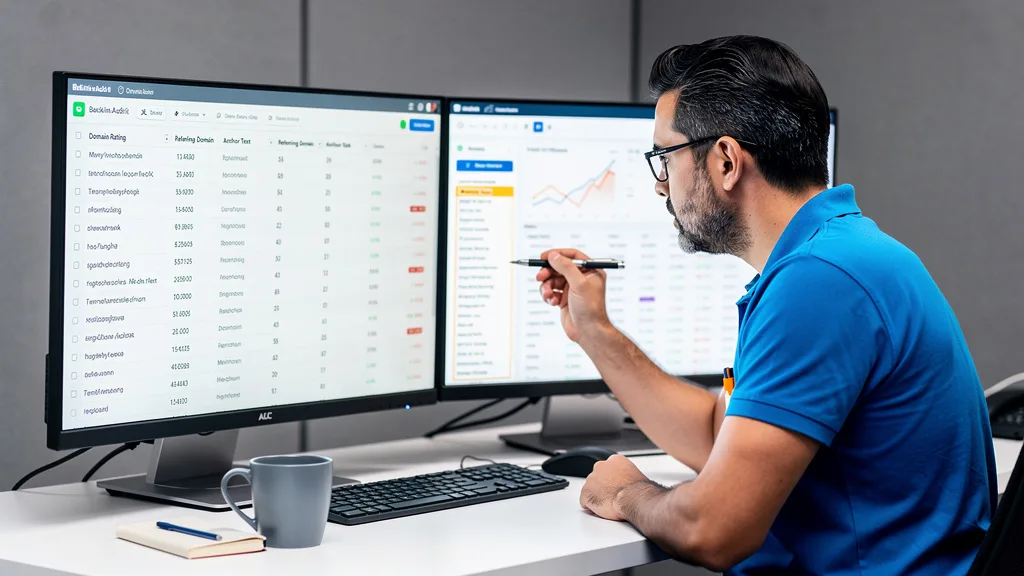
Ahrefs boasts the largest and most frequently updated backlink index in the industry. This makes it the go-to tool for in-depth backlink discovery and competitive analysis. Its proprietary Domain Rating (DR) metric is the industry standard for quickly assessing a site's backlink authority. Features like the Site Explorer allow you to dissect any website's link profile, view organic traffic data, and identify top-linked content, making it invaluable for executing our 7-point checklist.
Semrush: The All-in-One SEO and Link Audit Suite
Semrush is a comprehensive digital marketing suite where backlink analysis is one powerful component among many. Its Backlink Audit tool is particularly useful for identifying and disavowing potentially toxic links, integrating directly with Google Search Console. While its backlink index was historically smaller than Ahrefs', it has grown significantly and is now highly competitive. Semrush is an excellent choice for agencies and businesses that want a single platform for SEO, PPC, content marketing, and social media.
Moz: Strong for Link Authority and Spam Score Metrics
Moz pioneered the concept of domain authority with its Domain Authority (DA) metric. While DA is sometimes seen as less responsive than Ahrefs' DR, it remains a widely respected metric. Moz's standout feature for link verification is its Spam Score, which predicts the likelihood that a website is spammy based on a range of signals. This can be extremely helpful in quickly flagging risky link prospects. Moz's Link Explorer is a robust tool, though its link index is not as vast as its competitors.
Key Takeaways
- DR is Not Enough: A high Domain Rating is only a starting point. Never acquire a link based on this metric alone.
- Relevance is King: A link's value is primarily determined by its topical relevance to your website. A lower DR, relevant link is better than a high DR, irrelevant one.
- Traffic is a Trust Signal: A website with stable or growing organic traffic is a healthy, trustworthy source for a backlink. Zero traffic is a major red flag.
- Context Matters: An editorially placed, in-content link is far more valuable than links in footers, bios, or sidebars.
- Audit the Neighborhood: Always check the page's other outbound links. Avoid pages that link to spam or hundreds of unrelated sites.
- Use Professional Tools: Tools like Ahrefs, Semrush, and Moz are essential for conducting a thorough and efficient backlink audit.
Frequently Asked Questions
How much does a professional backlink audit cost?
The cost of a professional backlink audit can range from a few hundred to several thousand dollars. The price depends on the size of your backlink profile, the depth of the analysis, and the provider's expertise. A basic audit might just identify toxic links, while a comprehensive one includes competitive analysis and a strategic action plan. You can view our transparent backlink pricing for specific packages.
Are high DR links from PBNs still valuable for SEO?
Yes, but only if they come from a high-quality, professionally managed private blog network. These networks use unique footprints, host sites on different IPs, and post quality content to appear completely natural. Low-quality, public PBNs are easily detected by Google and can result in penalties. The key is working with a provider who prioritizes safety and quality. Our PBN links are designed to be 100% safe and effective.
Is it worth paying for a link building service to get high DR links?
For most businesses, especially in competitive niches, paying for a professional service is worth the investment. Experts have the tools, processes, and established relationships to acquire high-quality links efficiently and safely. This saves you an immense amount of time and helps you avoid the costly mistakes of acquiring toxic links that could harm your website's rankings in the long run.
What is considered a good Domain Rating (DR) to target?
A "good" DR is relative to your industry and competitors. In a less competitive niche, a DR 40+ link might be very powerful. In hyper-competitive spaces like finance or crypto, you may need to target DR 60+ or even DR 80+ sites to move the needle. The best approach is to analyze the backlink profiles of the top-ranking sites for your target keywords and aim to acquire links from domains with similar or higher authority. We specialize in acquiring these high DR backlinks for our clients.
Conclusion
Mastering how to verify high DR backlinks is a critical skill that separates sustainable SEO success from short-term gains and long-term risks. By implementing this 7-point audit checklist, you can move beyond superficial metrics and make informed decisions that strengthen your backlink profile, protect your site from penalties, and build a powerful foundation for organic growth. This diligent process ensures every dollar you invest in link building delivers maximum impact and a positive return.
If you're operating in a competitive niche like finance, crypto, or iGaming, you can't afford to take chances with your backlink quality. Let our team of specialists handle the complex work of vetting and acquiring high-authority, penalty-free links for you. Ready to build a backlink profile that dominates the search results? Get a Link Plan.