
Are you certain your private blog network (PBN) strategy isn't actively sabotaging your SEO efforts? While powerful when executed correctly, a single misstep can attract devastating Google penalties, wiping out your rankings and organic traffic overnight, a risk that businesses in competitive niches like finance and crypto simply cannot afford.
The most common PBN link building mistakes that trigger Google penalties involve creating detectable footprints. These include using cheap hosting with shared IPs, publishing low-quality or spun content, over-optimizing anchor text, and acquiring expired domains with a toxic history. In 2026, avoiding these errors is critical for using PBNs safely and effectively to boost your website's authority without being penalized by Google.
Understanding the High Risk of PBNs in 2026
Private Blog Networks have long been a controversial yet potent tool in an SEO's arsenal. When built and managed with surgical precision, they can provide the authority and link equity needed to rank in highly competitive industries. However, the line between a successful campaign and a catastrophic penalty is incredibly thin. Google's algorithms have become exceptionally sophisticated at identifying artificial link schemes, and PBNs are a primary target.

The inherent risk comes from the very nature of a PBN: it's a network of websites created for the sole purpose of building links to a target site. This is a direct violation of Google's Webmaster Guidelines. If Google's systems detect patterns that suggest a network is controlled by a single entity, it can lead to manual actions, algorithmic suppression, or complete de-indexing of not only your PBN sites but your money site as well. For this reason, any PBN strategy in 2026 must prioritize footprint elimination and appear as natural as possible.
Common PBN Link Building Mistakes to Avoid
Many SEOs and businesses venture into PBNs with a misunderstanding of the complexities involved, leading to easily avoidable errors that damage their SEO progress. These common mistakes create obvious red flags for search engine algorithms, effectively inviting penalties that can take months or even years to recover from. Understanding these pitfalls is the first step toward building a safer, more resilient link building strategy.

Avoiding penalties isn't about finding a single magic trick; it's about disciplined execution across every aspect of your network. From domain acquisition to hosting and content creation, every decision matters. Below, we detail the most frequent errors we see and provide a clear path to avoiding them, ensuring your investment in backlinks yields positive returns, not wasted effort.
| Common Mistake | Safe Best Practice |
|---|---|
| Using domains with toxic link history | Acquiring clean, niche-relevant expired domains with a strong, clean backlink profile |
| Hosting all sites on one IP/provider | Using premium, distinct hosting providers and unique IP addresses for each site |
| Aggressive, keyword-stuffed anchor text | Using a diverse and natural anchor text profile (branded, naked URL, generic, partial match) |
| Thin, spun, or low-quality content | Publishing unique, valuable, and well-written content on each PBN site |
Using Expired Domains with a Toxic Backlink Profile
One of the most critical errors is acquiring an expired domain without performing exhaustive due diligence. A domain might have impressive metrics like high Domain Authority (DA) or Domain Rating (DR), but these can be misleading. If the domain was previously used for spam, adult content, or part of a de-indexed PBN, it carries a toxic history that will be passed on to your network and, ultimately, your money site.
Before purchasing any expired domain, you must conduct a thorough backlink audit. Analyze its historical link profile for spammy anchors, links from foreign language sites, or connections to penalized industries. Tools like Ahrefs, Semrush, and Majestic are indispensable for this process. A clean domain with relevant, authoritative backlinks is a foundational asset; a toxic one is a liability waiting to destroy your SEO progress.
Leaving Obvious Footprints Across Your Network
Footprints are the digital breadcrumbs that allow Google to connect the dots and identify your PBN. Leaving them is the fastest way to get your entire network penalized. These footprints can be technical, such as using the same hosting provider, IP address range, or domain registrar information (even with WHOIS privacy) for all your sites.
Footprints also manifest on-site. Using the same WordPress theme, plugin set, website structure, or contact information across multiple sites is a massive red flag. A professionally managed PBN will ensure every site is unique, hosted on different premium providers, uses different themes and plugins, and has varied back-end configurations. The goal is to make each site in your network appear as an independent, legitimate website to an algorithmic or manual reviewer.
Over-Optimizing Anchor Text to Your Money Site
Aggressive anchor text optimization is a classic link building mistake that Google has penalized for over a decade. When the vast majority of your backlinks use the exact same commercial keyword (e.g., "buy crypto online"), it's an unnatural pattern that screams manipulation. This is especially true for PBN links, where you have full control over the anchor text.
A natural backlink profile is diverse. It includes a mix of branded anchors (your company name), naked URLs (your website address), generic phrases ("click here," "read more"), and a small percentage of partial and exact-match keywords. When building links from your PBN, you must replicate this natural diversity. Over-optimization not only puts your site at risk of a penalty but also signals to Google that your links are not editorially earned.
Ignoring Content Quality and Thin Content Issues
In the past, PBNs were often populated with low-quality, spun, or barely readable articles. This approach is no longer viable in 2026. Google's algorithms are much better at assessing content quality, and a site with thin or useless content offers no value to users. A PBN site filled with such content will have little to no authority to pass on, and it's a strong signal that the site exists only for link manipulation.
Each site in your network should be treated as a real, standalone asset. This means publishing well-written, unique, and genuinely useful content that is relevant to the site's niche. A good rule of thumb is to create content that you would be proud to have associated with your brand. High-quality content not only makes the PBN site look more legitimate but also helps it attract its own organic traffic and links, further strengthening its authority and insulating it from penalties.
Hosting All PBN Sites on a Single IP or Host
Hosting is one of the most common and easily detected footprints. Placing all your PBN websites on the same shared hosting account, or even with the same budget hosting provider, is a fatal error. This creates a clear technical link between all the sites, making it trivial for Google to identify and devalue the entire network in one fell swoop. Using so-called "SEO hosting" that places sites on different C-Class IPs is also an outdated and easily detectable tactic.
The only safe approach is to use a wide variety of reputable, brand-name hosting companies for each site in your network. This means using providers like SiteGround, Kinsta, WP Engine, and others, just as real, independent websites would. While this increases management complexity and cost, it is non-negotiable for avoiding detection. This diversification makes your network appear as a collection of unrelated websites, which is the ultimate goal.
Building Links Too Quickly or in Unnatural Patterns
The velocity and pattern of your link building are just as important as the links themselves. A brand-new website that suddenly acquires dozens of high-authority links in a week is an unnatural and suspicious signal. Likewise, building links in predictable, uniform bursts (e.g., exactly five links on the first of every month) can be flagged by algorithms looking for non-editorial patterns.
Effective link building, even with PBNs, should mimic a natural growth trajectory. This means starting slowly, gradually increasing the pace, and introducing variations in timing and volume. Link acquisition should appear organic and sporadic, not automated and systematic. This careful pacing helps your link profile grow in a way that aligns with your site's overall development and content production, avoiding the unnatural spikes that can trigger algorithmic filters and manual reviews. We often help clients manage this through our monthly link building packages, which ensure a natural and steady growth curve.
Signs Your Site Has a Google Penalty from PBN Links
Identifying a Google penalty is the first step toward recovery. Unfortunately, Google doesn't always send a clear notification, especially for algorithmic penalties. You must be vigilant and monitor your site's performance for key indicators that something is wrong. Ignoring these signs can lead to prolonged traffic loss and make recovery more difficult.
Sudden Drop in Organic Traffic and Rankings
The most obvious sign of a penalty is a sudden, sharp, and sustained drop in organic traffic that does not correspond to seasonal trends or major site changes. This is different from the normal daily fluctuations. You can see this clearly in Google Analytics or Google Search Console. If your traffic plummets overnight and stays down, it's a strong indication that you've been hit by either an algorithmic update or a penalty targeting your link profile.

Alongside the traffic drop, you will likely see a significant decrease in keyword rankings for your main commercial terms. Your site might fall from the first page to the tenth, or disappear from the top 100 results entirely. Use a rank tracking tool to monitor these changes. A widespread drop across many keywords points to a site-wide penalty, a common result of risky PBN activity.
Receiving a Manual Action in Google Search Console
A manual action is the clearest confirmation of a penalty. This is when a human reviewer at Google has determined that your site violates their guidelines. You will receive a notification in your Google Search Console account under the "Security & Manual Actions" section. The message will often specify the reason, such as "Unnatural links to your site."
Receiving this notice is serious, but it also provides a clear path forward. Unlike an algorithmic penalty, you know exactly what the problem is, and Google provides a mechanism to request a review after you have fixed the issue. It's crucial to address the underlying problem (i.e., the PBN links) comprehensively before submitting a reconsideration request.
Pages or Entire Sites Being De-Indexed
The most severe penalty is de-indexing. This is when Google completely removes some or all of your website's pages from its search results. You can check for this by performing a `site:yourdomain.com` search on Google. If the number of results is zero or has drastically decreased, your site has been de-indexed.
De-indexing is typically reserved for the most egregious violations, where Google believes the site offers no value or is actively harmful to users. Recovering from a full de-indexing is extremely difficult and can sometimes be impossible. This is the ultimate price for engaging in high-risk PBN strategies without the necessary expertise and caution, and it underscores the importance of avoiding the common mistakes outlined earlier.
A Step-by-Step Guide to Penalty Recovery
Discovering your site has been penalized can be a stressful experience, but a methodical approach can lead to a successful recovery. The process involves identifying and removing the problematic links and communicating your cleanup efforts to Google. Acting decisively and thoroughly is key to regaining your rankings.
Step 1: Conduct a Thorough Backlink Audit
The recovery process begins with a comprehensive audit of your entire backlink profile. You need to identify every single link that could be considered unnatural, particularly those from your PBN. To do this, export backlink data from multiple sources, including Google Search Console, Ahrefs, Moz, and Semrush, and compile them into a single spreadsheet.
Next, manually review each link. Scrutinize the linking domain, the anchor text, and the quality of the surrounding content. Tag every suspicious link, especially those from known PBN sites, directories with no editorial oversight, and sites with thin or irrelevant content. This detailed list will form the basis of your cleanup effort.
Step 2: Create and Submit a Disavow File
Once you have a complete list of toxic or unnatural links, your primary goal is to have them removed. You should attempt to contact the webmasters of the linking sites to request removal, though this is often unsuccessful, especially with PBNs. For any links you cannot get removed, you must use Google's Disavow Tool.
Create a text file (.txt) listing all the domains or specific URLs you want Google to ignore when assessing your site. Be thorough; it's better to disavow a potentially good link than to leave a toxic one in place. Submit this file via the Google Disavow Tool in Search Console. This action tells Google that you do not endorse these links and are taking proactive steps to clean up your profile.
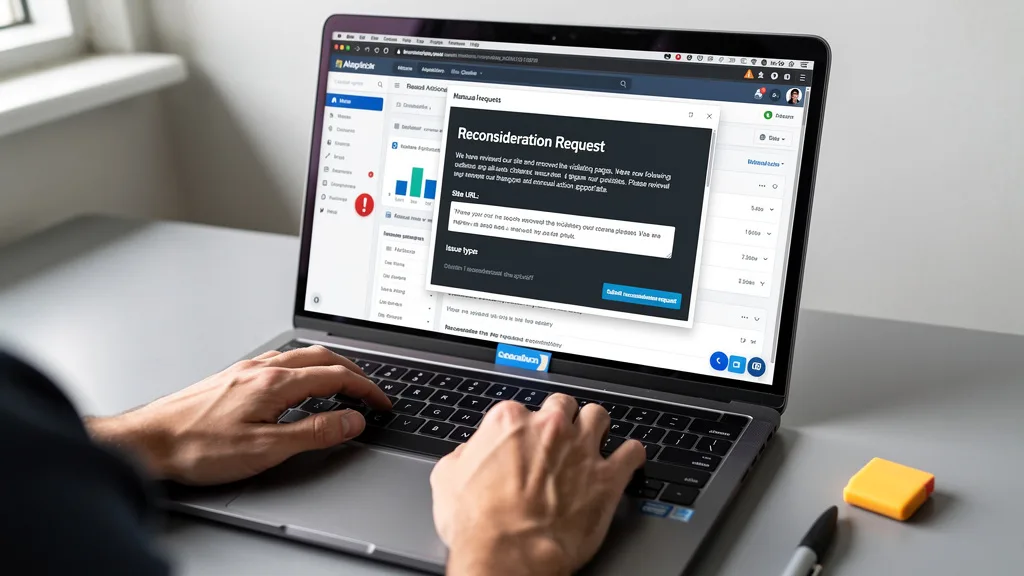
Step 3: File a Reconsideration Request for Manual Actions
If your site received a manual action, submitting a disavow file is not enough. You must also file a reconsideration request through Google Search Console. This is your opportunity to explain to Google what went wrong, the specific actions you took to fix the problem, and why your site should be trusted again.
In your request, be honest, concise, and specific. Document your cleanup efforts meticulously. Explain that you identified and removed or disavowed all violating links. Assure Google that you now understand their guidelines and have put processes in place to prevent future violations. A sincere and thorough request has a much higher chance of success. After submission, it may take several weeks to receive a response.
Smart Link Building Strategies to Use Instead of PBNs
While recovering from a penalty, it's wise to pivot to safer and more sustainable link building methods. While we specialize in executing PBNs correctly for tough niches like link building for finance sites, a well-rounded strategy includes white-hat tactics. These strategies focus on earning links editorially by providing genuine value, which builds long-term authority and insulates your site from future penalties.
Focus on Creating High-Value Linkable Assets
A linkable asset is a piece of content so valuable that other websites will want to link to it naturally. This could be a comprehensive guide, an original research study, a free tool or calculator, or a compelling infographic. Investing in creating these high-quality resources is one of the most effective long-term SEO strategies.
Once you've created a linkable asset, your job is to promote it. Reach out to bloggers, journalists, and webmasters in your niche who might find it useful for their audience. This approach turns link building from a transactional process into a value-driven exchange, resulting in high-quality, authoritative backlinks that Google loves.
Pursue Digital PR and Strategic Guest Blogging
Digital PR involves crafting compelling stories and data that journalists and major publications want to cover. This can result in powerful backlinks from highly authoritative news sites and industry blogs. It requires a different skillset than technical SEO but can deliver some of the most impactful links possible.
Strategic guest blogging, on the other hand, involves writing and publishing articles on other relevant, high-quality blogs in your industry. This is not about spamming low-quality sites with posts. It's about securing a placement on a reputable site where you can share your expertise, reach a new audience, and earn a valuable, contextually relevant backlink. For example, our expertise in backlinks for crypto projects often allows us to place articles on leading Web3 publications.
Reclaim Unlinked Brand Mentions and Broken Links
These two tactics are some of the quickest ways to secure valuable backlinks. Unlinked brand mentions occur when another website writes about your company, product, or service but doesn't link to your site. You can use tools to find these mentions and then reach out to the author or webmaster with a friendly request to add a link.
Broken link building involves finding dead links (404 errors) on other websites that point to resources similar to what you offer. You can then contact the webmaster, inform them of the broken link, and suggest they replace it with a link to your relevant content. This is a helpful, non-spammy approach that provides value to the other site owner while earning you a quality backlink. We often incorporate this into our niche edits and link insertions service for maximum efficiency.
Key Takeaways
Successfully navigating PBN link building in 2026 requires discipline and a deep understanding of Google's guidelines. Here are the most critical points to remember to avoid penalties and maximize your SEO results.
- Footprints are Fatal: The primary cause of PBN penalties is leaving detectable footprints. Diversify hosting, themes, registrars, and on-page elements to make each site unique.
- Quality Over Quantity: Invest in clean expired domains with strong, relevant backlink profiles. A single quality PBN site is worth more than ten toxic ones.
- Content is Still King: Populate your PBN sites with unique, valuable content. Thin or spun content is a massive red flag and provides no authority.
- Natural Profiles Win: Mimic a natural link profile with diverse anchor text and a gradual, sporadic link velocity. Avoid aggressive optimization and predictable patterns.
- Be Prepared for Recovery: Know the signs of a penalty (traffic drops, manual actions) and be ready to conduct a thorough backlink audit and use the disavow tool if necessary.
Frequently Asked Questions
What are some common link building mistakes besides using PBNs?
Beyond PBNs, some of the most common link building mistakes include buying low-quality link packages from freelance marketplaces, participating in reciprocal link schemes, and creating an over-optimized anchor text profile from any link source. Another major error is focusing solely on link quantity instead of quality and relevance. According to many experts, these are some of the Top 12 Link Building Mistakes to avoid for sustainable SEO success.
Additionally, ignoring internal linking is a missed opportunity. A strong internal link structure helps distribute link equity throughout your site and improves user navigation. Finally, failing to build links to pages other than your homepage can create an unnatural profile and limit the ranking potential of your important service or product pages.
What is the 80/20 rule in the context of SEO?
In SEO, the 80/20 rule, or Pareto Principle, suggests that approximately 80% of your results will come from 20% of your efforts. For example, you might find that 20% of your pages generate 80% of your organic traffic, or that 20% of your backlinks are responsible for 80% of your domain authority. This principle is a powerful tool for prioritization.
By identifying this critical 20%, you can focus your resources on the activities that deliver the most impact. This could mean doubling down on creating content similar to your top-performing pages or focusing your link building efforts on acquiring links from the top 20% of authoritative domains in your niche. It's about working smarter, not just harder.
Can Google penalize a site for duplicate content?
While Google doesn't have a specific "duplicate content penalty" in the same way it has one for unnatural links, having large amounts of duplicate content can negatively impact your SEO. When multiple pages have the same or very similar content, Google's crawlers can become confused about which version to index and rank. This can dilute link equity and lead to lower rankings for all versions of the page.
The issue is less about being penalized and more about creating a confusing and suboptimal experience for search engines. It's a sign of a low-quality site. The best practice is to ensure every page on your site has unique, valuable content. If you must have similar pages, use canonical tags to tell Google which version is the primary one you want to have indexed.
How long does it typically take to recover from a Google penalty?
The recovery time from a Google penalty varies greatly depending on the type and severity of the penalty. For a manual action, recovery is contingent on how quickly you can clean up your backlink profile and get your reconsideration request approved. This process can take anywhere from a few weeks to several months.
Recovery from an algorithmic penalty can be longer and less predictable. Since there is no reconsideration request, you must fix the underlying issues and then wait for Google to run its next algorithm update, which could be months away. In both cases, a swift and thorough cleanup is crucial to minimizing the downtime and starting the recovery process.
Are all links from a PBN automatically considered bad by Google?
Technically, any link built with the intent to manipulate rankings is against Google's guidelines. However, Google's ability to act depends on its ability to detect the link as manipulative. A link from a well-managed, footprint-free PBN that is topically relevant and placed within high-quality content can be indistinguishable from a natural, editorial link. You can read more about how this works in this guide on Google Penalties Explained.
The key distinction is execution. Links from poorly managed PBNs with obvious footprints are easily detected and are absolutely considered bad. In contrast, links from a professionally built and maintained network are designed to pass algorithmic and manual reviews. The risk is never zero, but expertise significantly mitigates it, turning a PBN link from a liability into a powerful asset.
Conclusion
Avoiding PBN link building mistakes that trigger Google penalties is not about luck; it's about disciplined, expert execution. By focusing on footprint elimination, acquiring clean domains, prioritizing content quality, and maintaining a natural link profile, you can harness the power of PBNs to dominate competitive niches without risking your online presence. The key takeaway is that shortcuts and cheap solutions are the fastest path to a penalty; investing in a professional, meticulous strategy is the only way to ensure long-term success and protect your digital assets.
Navigating the complexities of PBNs requires specialist expertise, especially in high-stakes industries like finance, crypto, and iGaming. If you're looking to build authority safely and effectively, our team at Kamaal SEO can help. We provide penalty-free link building that delivers real ranking improvements. Get a Link Plan.