
Are you considering PBN links to boost your SEO but worried about choosing the wrong provider? A powerful Private Blog Network (PBN) can accelerate your rankings, but a poorly managed one can lead to severe penalties and wasted investment. The difference between success and failure lies entirely in your ability to properly vet the seller.
To effectively vet a PBN link seller, you must investigate four critical areas: seller reputation and transparency, technical network health, on-page content and link quality, and the commercial terms of the deal. This involves checking for hidden network footprints, analyzing domain history with tools like Ahrefs, assessing content originality, and verifying that the pricing aligns with the quality offered. A thorough evaluation prevents you from buying links that could harm your site's authority.
A Private Blog Network, or PBN, is a collection of authoritative websites used to build backlinks to a primary website for the purpose of improving its search engine rankings. These networks are typically built using expired domains that have retained their backlink authority and trust signals. When used strategically, these links can pass significant ranking power, often referred to as "link juice," to your main site.
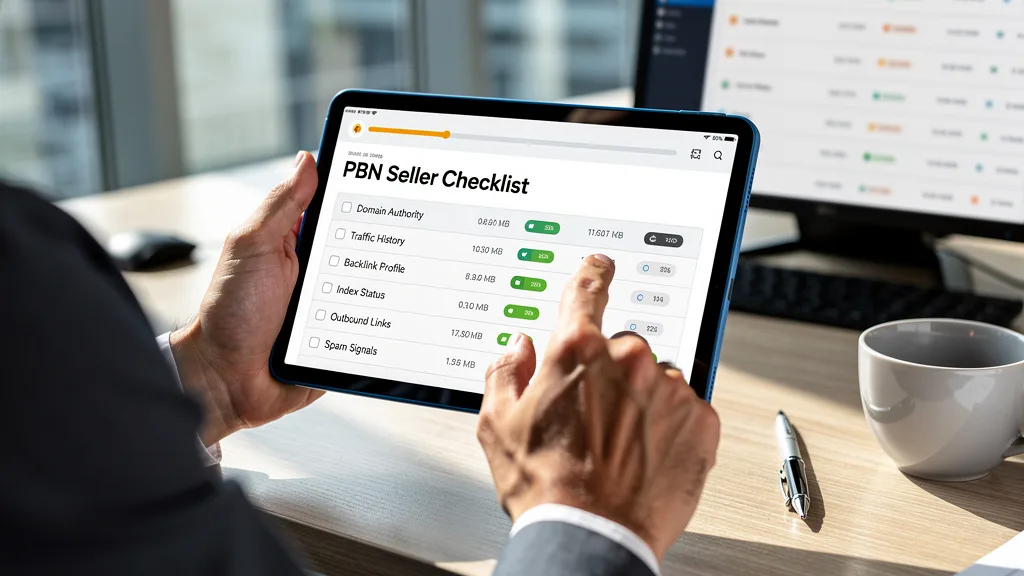
However, the power of PBNs also makes them a high-risk tactic if managed improperly. Google's guidelines explicitly warn against link schemes designed to manipulate PageRank. If a PBN is discovered, all sites within the network can be deindexed, and any site receiving links from it can face a manual penalty, leading to a catastrophic loss of traffic. This is why learning how to vet a PBN link seller: a 12 point checklist is not just recommended, it is an essential risk management strategy for any serious SEO campaign in 2026.
The Risks vs. Rewards of Using PBN Links in 2026
The primary reward of using PBN links is the speed and control they offer. Unlike traditional outreach, you don't have to wait for a webmaster to approve your link. You can control the anchor text, the surrounding content, and the exact page the link points to, allowing for a highly targeted SEO strategy. For competitive niches like iGaming or finance, this level of control can provide a significant competitive edge, delivering ranking improvements much faster than organic link building methods.
The risks, however, are substantial. The biggest danger is a Google penalty resulting from being associated with a low-quality network. These networks often leave detectable "footprints," such as using the same hosting provider, IP address range, or website theme. A seller who cuts corners puts all of their clients at risk. Beyond penalties, you risk wasting your budget on links that provide no value or, worse, have a negative impact. A proper vetting process mitigates these risks by ensuring you are investing in a genuinely private and powerful network.
"In 2026, the line between a valuable PBN link and a toxic one is thinner than ever. The key isn't just buying a link; it's buying a link from a network that is technically sound and managed with extreme care to avoid detection. Your due diligence is your only real protection."
The PBN Seller Vetting Checklist: 4 Key Areas to Investigate
A comprehensive vetting process is your best defense against low-quality providers. To simplify this, we've organized the process into four key areas of investigation, which together form a detailed checklist. By systematically working through these stages, you can confidently assess a seller's quality and determine if their network is a safe and effective investment for your website.
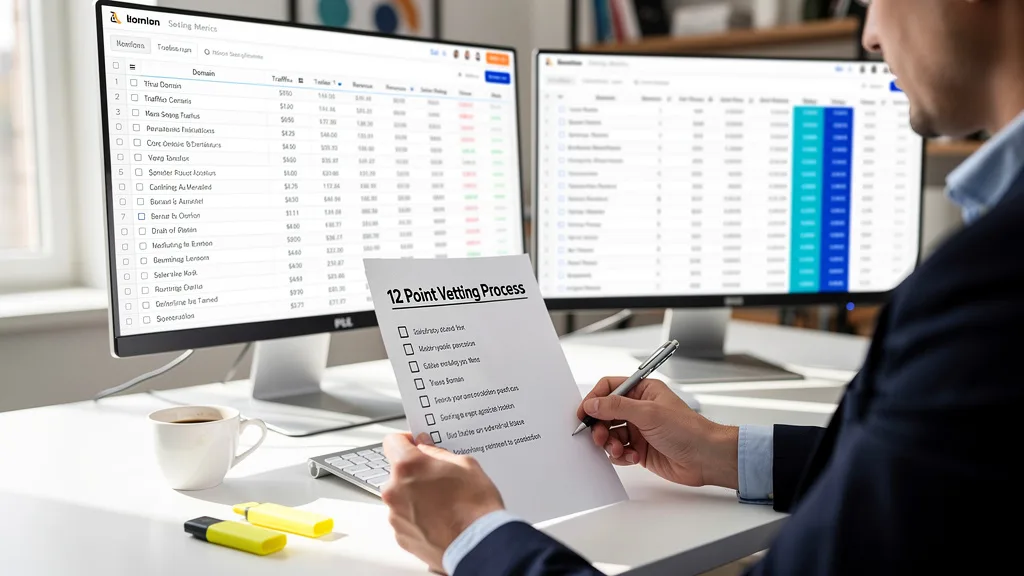
These four areas cover everything from the seller's business practices to the technical details of their network and the quality of the final product. Neglecting any one of these areas can leave you exposed to significant risk. Use the following sections as your guide to performing a thorough analysis before committing your budget. This is the core of how to properly vet a PBN link seller.
Area 1: Seller Reputation and Transparency
Your investigation should begin with the seller themselves. A reputable provider will have a history of positive feedback and will be transparent about their processes, without revealing sensitive network details. Look for reviews on third-party platforms, forums, and SEO communities. Be wary of sellers who only have testimonials on their own website, as these can be easily fabricated.
Engage with the seller directly. Ask questions about their experience, their process for acquiring domains, and their policies on link replacements. A professional seller will provide clear, confident answers. If they are evasive, overly secretive, or use high-pressure sales tactics, consider it a major red flag. Transparency about their process, like the kind found in a detailed guide on monthly link building packages, is a sign of a confident and legitimate operation.
Area 2: Technical Network Health and Footprint
This is the most technical but crucial part of the vetting process. A PBN's strength lies in its ability to appear as a collection of independent websites. Any pattern that links them together is a footprint that search engines can use to identify and devalue the entire network. You must verify that the seller actively works to eliminate these footprints.
Key technical checks include ensuring all sites in the network are hosted on different C-Class IP addresses from various hosting providers. Ask the seller about their hosting strategy. They should also use different domain registrars and have private WHOIS information. Furthermore, the websites themselves should not share common themes, plugins, or analytics codes. While you may not get a full list of sites, a seller should be able to explain their methods for ensuring this diversity. competitive niches like iGaming or finance.
Area 3: Content and On-Page Link Quality Analysis
The link you purchase is only as valuable as the page it's placed on. A low-quality PBN will be filled with spun, AI-generated, or irrelevant content. Ask for samples of sites in their network or previous work. The content should be unique, readable, and relevant to the site's original topic. A repurposed domain about classic cars should not suddenly have an article about crypto.
Examine the link placement itself. Your link should be placed contextually within a relevant article, not in a sitewide footer or a blogroll labeled "Partners." Also, analyze the outbound link profile of the sample sites. A quality PBN site will link out to other authoritative, non-competing sites to appear natural. If a site links out exclusively to other client money sites, it's a clear sign of a link farm, which will eventually be penalized. Investing in quality PBN links means ensuring the on-page environment is clean and natural.
Area 4: Pricing, Guarantees, and Post-Purchase Support
While you should always seek value, extremely cheap PBN links are a significant red flag. Building and maintaining a high-quality, footprint-free PBN is expensive. Prices that seem too good to be true usually indicate that the seller is cutting corners on hosting, content, or domain acquisition. Compare the seller's backlink pricing with industry standards to gauge if it's realistic.
Finally, understand the seller's guarantees and support policies. Do they guarantee the link will remain live for a certain period? What happens if a site your link is on gets deindexed? A reputable seller will have a clear policy for replacing lost or deindexed links. Good customer support and a fair replacement policy show that the seller is confident in the quality of their network and is invested in a long-term relationship with their clients.
Major Red Flags That Signal a Low-Quality PBN Seller
During your vetting process, certain warning signs should immediately raise your suspicion. Spotting these red flags early can save you from a poor investment and potential SEO damage. Be on the lookout for sellers who exhibit any of the following characteristics, as they are often associated with low-quality or dangerous PBNs.
- Publicly Shared Domain Lists: A seller who offers to show you their entire list of PBN sites is compromising the privacy of the whole network.
- "Too Good to Be True" Pricing: Links selling for $5-$10 are almost certainly part of a low-quality, high-risk network.
- Identical Site Designs: Using the same WordPress theme, even with different colors, is a massive footprint.
- Blocked Crawler Access: If a seller blocks crawlers like Ahrefs or Majestic from their sites, they are likely hiding a poor backlink profile or other issues.
- Poor Quality Sample Content: If the samples they provide are filled with grammatical errors or are obviously spun, the rest of the network is likely the same.
- No Link Replacement Guarantee: A lack of policy for deindexed sites suggests the seller either doesn't track their network's health or doesn't care about client outcomes.
Tools to Help You Analyze Backlinks and PBN Quality
You don't have to rely solely on a seller's claims. Several powerful SEO tools can help you independently analyze backlinks and assess the quality of a PBN. When provided with sample URLs, you can use these platforms to investigate a domain's history, backlink profile, and authority metrics. Familiarizing yourself with these tools is a critical step in becoming proficient at vetting link providers. PBNs vs Guest Posts vs Niche Edits.
Here are some of the most effective tools for PBN analysis:
| Tool | Primary Use Case for Vetting | Key Metric |
|---|---|---|
| Ahrefs | Analyzing a domain's backlink profile and traffic history. | Domain Rating (DR) |
| Majestic | Assessing link authority and topical relevance. | Trust Flow (TF) & Citation Flow (CF) |
| Moz | Evaluating overall domain authority and spam score. | Domain Authority (DA) & Spam Score |
| Archive.org (Wayback Machine) | Checking a domain's past usage and content history. | Historical Snapshots |
Using these tools, you can verify a domain's authority metrics (like DR or TF) and, more importantly, check its history on Archive.org to ensure it wasn't previously used for spam or illicit purposes. This independent verification is a non-negotiable part of the process for anyone serious about How to Buy Dofollow Backlinks safely.
Key Takeaways
Successfully navigating the world of PBNs in 2026 requires diligence and a structured approach. Choosing the right provider is the single most important factor in determining whether your campaign will succeed or fail. Rushing this process or opting for the cheapest option is a recipe for disaster.
Here are the essential takeaways from our guide:
- Vetting is Non-Negotiable: The risks of using a low-quality PBN are too high to ignore. A thorough vetting process is your primary defense.
- Focus on Four Key Areas: Systematically evaluate seller reputation, technical network health, content quality, and commercial terms.
- Trust but Verify: Use tools like Ahrefs and Archive.org to independently verify a seller's claims about their domains.
- Red Flags Mean Stop: If you encounter major red flags like public domain lists or unrealistic pricing, walk away.
- Quality Over Cost: A high-quality, safe PBN link is an investment. Cheap links often cost more in the long run due to penalties and lack of results.
Frequently Asked Questions
How many websites do I need to build an effective PBN?
The number of websites needed for an effective PBN depends entirely on your goals, competition, and budget. There is no magic number. For a small local business, a handful of powerful, relevant sites might be enough to see significant movement. For a national or international campaign in a competitive niche, you might need a network of 50 or more sites to make a real impact.
Instead of focusing on a specific number, prioritize the quality and authority of the domains. Ten high-authority sites with clean histories and strong backlink profiles are far more valuable and safer than 100 low-quality, spammy domains. Start small, test the impact, and scale your network based on results and budget.
Does PBN link building still work for SEO in 2026?
Yes, PBN link building absolutely still works for SEO in 2026, but with a major caveat: it only works if it's done correctly. The core principle of SEO, that authoritative backlinks are a primary ranking factor, has not changed. PBNs are simply a method of creating those authoritative links with a high degree of control. When a network is built and managed to be indistinguishable from real, independent websites, the links are incredibly powerful.
The reason many believe PBNs are "dead" is that they have encountered low-quality networks that were easily detected and penalized. These public or semi-private networks are indeed ineffective and dangerous. However, truly private blog networks that prioritize eliminating footprints and providing value remain one of the most effective, albeit advanced, tactics in an SEO's toolkit. The question of Should You Use and Rent/Buy PBN links depends on your risk tolerance and ability to vet providers properly.
What is the difference between a PBN link and a guest post?
The primary difference lies in ownership and control. A PBN link comes from a website that is owned or controlled by the link seller or by yourself. This gives you complete control over the anchor text, the content, and the link's permanence. You can place the link exactly as you need it to maximize its SEO impact. This is similar to how a niche edits & link insertion service operates, but on a network you control.
A guest post link, on the other hand, is placed on a third-party website that you do not own. You must pitch the site owner, write content that meets their guidelines, and they have the final say on whether the link is included, what the anchor text is, and if it's a dofollow link. While often considered a "safer" or more white-hat tactic, guest posting offers far less control and can be much slower and more expensive to scale.
How can you tell if a site is part of a private blog network?
Detecting a well-managed PBN is extremely difficult by design. However, you can often spot signs of a low-quality PBN by looking for common footprints. Check the site's backlink profile using a tool like Ahrefs. If it has powerful links but very little organic traffic, it might be a PBN. Also, look at its outbound links. If it links out to a random assortment of commercial sites in different niches, it's likely a public PBN.
Other tell-tale signs include generic, low-quality content that seems out of place, the use of a common WordPress theme or structure seen on other suspicious sites, and having its server IP address located near other known PBN sites. If you suspect a competitor is using a PBN, you can analyze their backlink profile for patterns of links coming from sites with these characteristics.
What happens if a PBN site with my link gets deindexed?
When a PBN site is deindexed by Google, it means it has been removed from the search results, and any SEO value it passed is instantly lost. If you have a link on that site, that backlink becomes worthless. This is a primary risk associated with using PBNs, especially those from low-quality providers.
A reputable PBN seller will have a policy in place to handle this situation. Most high-quality providers offer a link guarantee or replacement policy, typically for a period of 6 to 12 months. If a site with your link gets deindexed within that window, they will replace it with a link on a different, healthy site in their network at no additional cost. Always clarify this policy before making a purchase.
Conclusion
Mastering how to vet a PBN link seller is a critical skill for any advanced SEO strategy in 2026. By following a structured checklist that examines seller reputation, technical health, content quality, and commercial terms, you can significantly reduce your risk and ensure your investment yields powerful results. Remember that in the world of PBNs, diligence is not optional; it is the fundamental requirement for success and safety.
Are you ready to leverage the power of high-authority backlinks but want to ensure it's done right? Our team specializes in building and managing footprint-free networks that deliver real ranking power. Let us help you develop a safe and effective strategy tailored to your goals. Get a Link Plan today to discuss your project with an expert.