
You've acquired a powerful expired domain, but how long should you wait before using it to link to your money site? Rushing the process can get your entire network penalized, while waiting too long feels like a waste of potential. The key is finding the sweet spot for a safe and effective launch.
The ideal PBN site warm up period is typically between 60 and 90 days. This duration allows you to properly season the domain by establishing a natural content footprint, generating social signals, and building initial authority before you point any high-value links to your primary website. A shorter 30-day period is extremely risky, while a 90+ day warm-up offers the maximum level of safety and link equity, making it the standard for high-stakes industries like finance and crypto.
What Is a PBN and Why Does the Warm-Up Period Matter?
A PBN, or private blog network, is a collection of authoritative websites you control, built on expired domains that retain their previous backlink profile. The primary purpose of a PBN is to pass link equity, or "link juice," to your main website (the "money site") to improve its search engine rankings. When managed correctly, these networks offer a powerful, direct way to build the types of links that move the needle, which is why we specialize in safe PBN backlinks for our clients.

The warm-up period is arguably the most critical phase in a PBN's lifecycle. Its purpose is to make the website appear completely natural and legitimate to search engine crawlers. A brand new site that immediately starts linking out to a commercial page looks suspicious. The warm-up process involves mimicking the growth pattern of a genuine blog: acquiring the domain, setting up unique hosting, slowly publishing content, and building a modest social presence. This patience is a non-negotiable step to erase footprints and ensure the long-term viability and safety of your network.
Choosing the right warm-up duration depends on your risk tolerance and the value of the asset you're trying to rank. While a faster timeline might seem appealing, the potential downsides often outweigh the benefits. For valuable money sites, patience is not just a virtue, it's a core risk management strategy. A hurried approach can lead to de-indexing, wasting the money and effort invested in acquiring the domain.
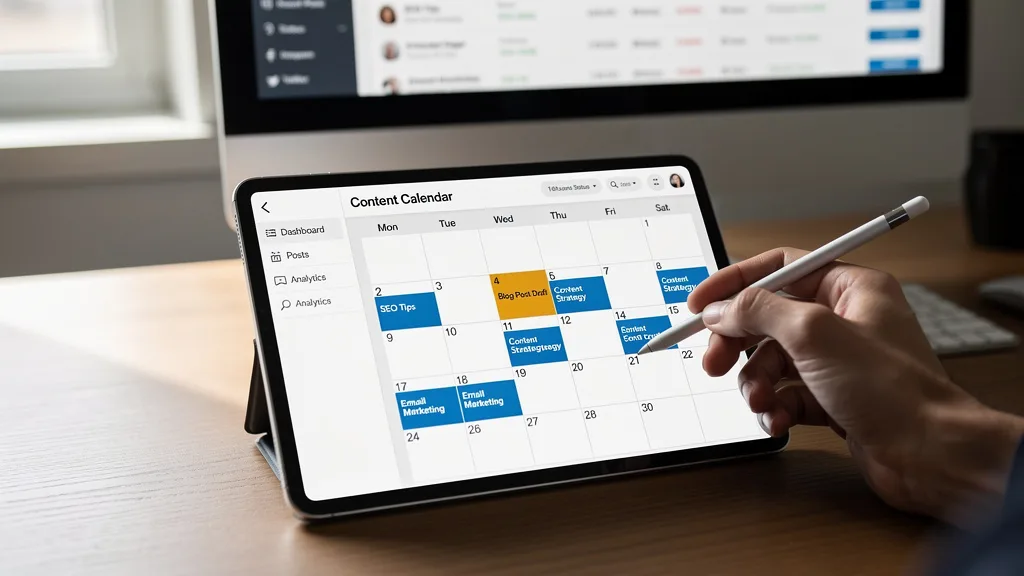
Below is a comparison of the most common timelines. This helps illustrate the trade-offs between speed and safety when preparing your network sites. As a rule, we advise clients to err on the side of caution, especially in competitive and high-scrutiny niches.
| Timeline | Risk Level | Trust Signal Strength | Best For |
|---|---|---|---|
| 30 Days | High | Low | Short-term or low-value projects; churn-and-burn strategies. Not recommended for primary assets. |
| 60 Days | Medium | Moderate | The industry standard, balancing reasonable safety with a timely launch for most campaigns. |
| 90+ Days | Low | High | High-value money sites, competitive niches (Finance, Crypto, iGaming), and long-term authority building. |
The 30-Day Express Warm-Up: High Risk, Low Trust
A 30-day warm-up is an aggressive strategy that prioritizes speed above all else. In this scenario, you would set up the site, publish a handful of articles, and begin linking to your money site within the first month. While this can deliver link equity quickly, it carries a significant risk of detection and penalty. Google's algorithms are adept at spotting unnatural growth patterns, and a site that appears and immediately starts firing off powerful links is a major red flag.
This approach is generally only considered by experienced SEOs for lower-stakes projects or in tiered link building strategies where the PBN site itself is not a critical asset. For any important money site, the risk of getting the PBN domain de-indexed, and potentially flagging your money site, is simply too high to justify the minimal time saved.
The 60-Day Standard Protocol: Building Credibility
The 60-day warm-up period is a widely accepted industry standard that offers a good balance between safety and efficiency. This timeline provides enough runway to establish a credible foundation for the website. Over two months, you can publish a steady stream of content, create basic social profiles, and allow the site to be fully crawled and indexed by Google naturally.
By the end of this period, the site has had time to "age" slightly and build a history that appears organic. When you do place the first link to your money site, it's within the context of an established blog rather than a freshly minted domain. This protocol significantly reduces the risk of penalties compared to the 30-day method and is suitable for most general SEO campaigns.
The 90+ Day Authority Build: Maximum Safety and Power
For high-value assets and ultra-competitive niches, a 90-day or even longer warm-up period is the gold standard. This extended timeline allows you to build a truly authoritative and believable asset. Over three months, you can implement a robust content strategy, generate organic social signals, and even attract a few natural links from other sources. This approach is fundamental for projects in sensitive sectors, which is why our iGaming & Casino PBN links service adheres to these strict protocols.
When the site has been nurtured for 90+ days, it no longer looks like a PBN site at all. It appears as a genuine, aged resource in its niche. The links you build from it are therefore perceived as more natural and carry more weight, all while posing the lowest possible risk to your money site. This is the methodology we employ for clients who cannot afford any margin of error.
Your Step-by-Step PBN Warm-Up Schedule for 2026
A successful warm-up requires a methodical, phased approach. Simply letting a domain sit idle is not enough. You must actively build its profile to mimic a real, growing website. The following three-phase schedule breaks down the process into manageable steps, guiding you from domain acquisition to your first safe outbound link.
Phase 1 (Days 1-30): Foundational Setup and Indexing
The first month is all about laying the groundwork and avoiding common footprints. Your primary goal is to get the site set up correctly and indexed by Google. Start by acquiring a clean expired domain with a good backlink profile. Set it up on a unique hosting IP address, preferably with a provider that understands PBNs. Install a common CMS like WordPress and use a unique theme and plugin combination for each site in your network.

During this phase, create essential pages like "About Us," "Contact Us," and a "Privacy Policy" to make the site look legitimate. Publish 3-5 introductory articles relevant to the domain's original niche. Don't add any outbound links yet. The focus is on creating a clean, professional-looking site and submitting it to Google Search Console to encourage natural indexing. Understanding the core principles is key, as outlined in academic discussions on Revisiting the 'Whys' and 'Hows' of preparation phases.
Phase 2 (Days 31-60): Content Velocity and Social Signals
In the second month, you'll ramp up activity to simulate a growing blog. Increase your content velocity by publishing another 5-10 articles, aiming for a consistent schedule like one or two posts per week. This demonstrates to Google that the site is active and regularly updated with fresh information. The content should remain high-quality and on-topic.
This is also the perfect time to build social signals. Create a few social media profiles for your blog persona on platforms like Twitter, Pinterest, or Facebook. Share your new articles on these profiles. This activity makes the site appear more authentic and can help drive a small amount of referral traffic, further strengthening its natural profile. Avoid any outbound links to your money site during this phase. crypto.
Phase 3 (Days 61-90+): Initial Outbound Linking
After 60 days of seasoning, your PBN site is ready for its primary purpose: linking out. However, you must still proceed with caution. Do not immediately link to your money site. Your first few outbound links should point to high-authority, non-competing websites like Wikipedia, major news outlets, or educational resources. This establishes a pattern of linking to credible sources.
Around day 75-90, you can place your first link to your money site. Embed this link naturally within a new, relevant article. Do not make it the only outbound link in the post; include another link to a different authority site to blend it in. After placing this first link, monitor the site's health and indexing status closely before adding any more. This slow, deliberate approach is the safest way to begin transferring authority.
Crafting a Believable Content Strategy for Your Network
The content on your PBN sites is a critical component of their believability. Low-quality, spun, or off-topic articles are a dead giveaway that a site exists only for SEO purposes. A convincing content strategy is just as important as avoiding technical footprints. Your goal is to create a blog that, to a casual observer or a Google quality rater, looks entirely genuine.
"In 2026, Google's algorithms are smarter than ever. The only PBNs that survive and thrive are those that function as valuable, standalone resources. Your content and publishing schedule must be indistinguishable from a real, passion-driven blog. There are no shortcuts."
Creating Unique and Relevant Articles
Every article published on your PBN must be 100% unique and well-written. Using spun content generators is a surefire way to get your network de-indexed. The articles should also be highly relevant to the expired domain's original topic. If you bought a domain that used to be about gardening, your new content should also be about gardening. This maintains thematic consistency and leverages the authority the domain already has in that niche.
Aim for a reasonable word count, typically between 500 and 1,000 words per article. Include images, proper formatting with headings and subheadings, and a natural writing style. The more effort you put into making the content genuinely useful and readable, the safer and more powerful your PBN site will be. This is a core principle behind any legitimate complete PBN guide.
Establishing a Consistent Publishing Cadence
Real bloggers don't publish 20 articles on one day and then go silent for six months. They follow a relatively consistent schedule. To make your PBN believable, you must mimic this behavior. A cadence of one to three new posts per week is a natural and sustainable rhythm that signals to Google that your site is actively maintained.
Use the scheduling feature in your CMS to plan posts in advance. This ensures a steady flow of new content without requiring daily management. This consistency not only helps with the warm-up but also maintains the site's health over the long term, making it a durable asset in your link building arsenal.
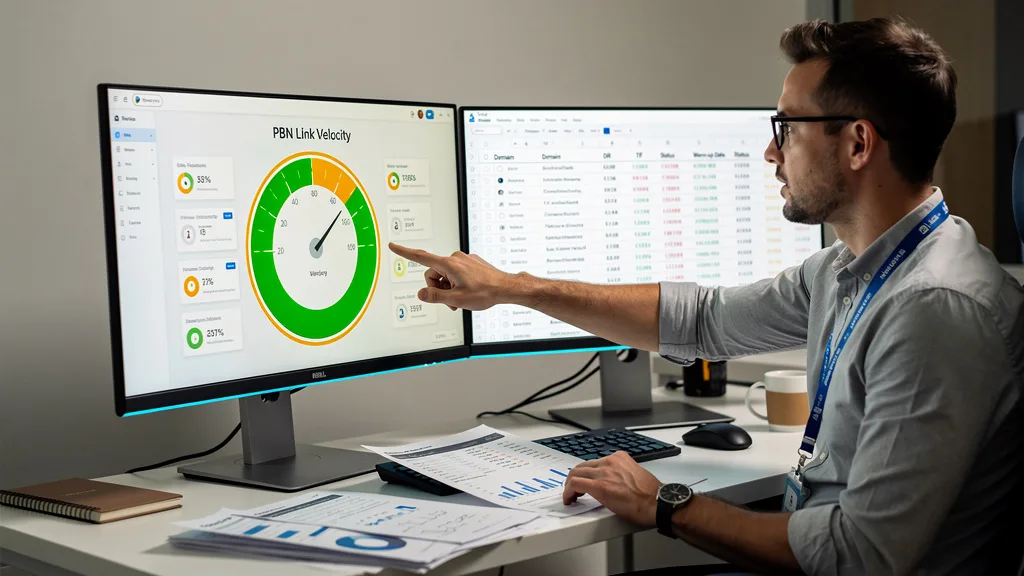
PBN Link Velocity: How Fast to Build Links Without a Penalty
Once your PBN site is fully warmed up, you must manage its link velocity carefully. Link velocity refers to the rate at which you add new outbound links to your money site. Building links too quickly is an obvious red flag. A natural blog doesn't link to the same commercial site in every new post. Your linking strategy should be slow, steady, and diversified.
As a general rule, start by adding just one link to your money site from each PBN. After that initial link, wait several weeks before considering another. A good practice is to ensure that no more than 20-25% of your articles contain a link to your money site. The other posts should either have no outbound links or link to other non-competing authority sites. This approach dilutes your footprint and is essential for long-term safety, forming a key part of the debate in PBNs vs. guest posts vs. niche edits.
Top Mistakes That Will Get Your PBN Sites Deindexed
Building a PBN is a high-stakes game where one mistake can bring down your entire network. Avoiding penalties requires meticulous attention to detail and a deep understanding of what Google looks for. Here are the most common and fatal mistakes that lead to sites deindexed.
- Shared Hosting Footprints: Hosting multiple PBN sites on the same IP address or using cheap, known "SEO hosting" providers is the easiest footprint to detect. Use different, reputable hosts for each site.
- Public Whois Information: Exposing your name or company details in the Whois records for your PBN domains is a direct link back to you. Always use Whois privacy.
- Identical Themes and Plugins: Using the same WordPress theme, page builder, or set of plugins across your network creates a clear pattern that algorithms can spot.
- Linking Out Too Quickly: Skipping the warm-up period and linking to your money site from day one is a sign of an unnatural site.
- Low-Quality or Spun Content: Gibberish content is a massive red flag for manual reviewers and algorithms alike. Content must be unique and readable.
- Over-Optimization and Footprints: Linking only to your money sites, using the same anchor text repeatedly, or having sitewide links creates an obvious, unnatural pattern.
Key Takeaways
Successfully leveraging a PBN in 2026 hinges on your ability to build and manage it without leaving detectable footprints. The warm-up period is your primary tool for achieving this. Here are the most important points to remember:
- Patience is Paramount: A 60-90 day warm-up period is the standard for safety and effectiveness. Rushing the process is the fastest way to get your network burned.
- Mimic Natural Growth: The goal of the warm-up is to make your PBN site look like a real, actively maintained blog. This involves a slow rollout of quality content and social signals.
- Content is King: Use only unique, relevant, and well-written content. Spun or low-quality articles are a major red flag that will compromise your network.
- Avoid Footprints: Use unique hosting, varied themes and plugins, and Whois privacy for every site in your network. Footprint management is non-negotiable.
- Control Link Velocity: Once warmed up, build links to your money site slowly and sporadically. Mix in links to other authority sites to maintain a natural outbound link profile.
Frequently Asked Questions
What does PBN stand for in SEO?
PBN stands for Private Blog Network. It is a network of websites that an individual or company controls, built on expired or auctioned domains that have existing authority and backlinks. The primary use of a PBN is to build links to a main website (money site) to improve its search engine rankings by passing on that authority.
These networks are called "private" because they are designed to look like a collection of independent sites, with no obvious connection between them or to the owner. Proper management is key to keeping the network private and effective, preventing search engines from identifying and devaluing it.
Does a PBN still work effectively in 2026?
Yes, PBNs absolutely still work effectively in 2026, but only when executed with an extremely high level of care and expertise. The days of using cheap, low-quality networks are long gone. Today's successful PBNs are built on strong, clean domains and are managed to be indistinguishable from real, high-authority websites.
For competitive niches like Finance, Crypto, and iGaming, a well-managed PBN can provide a significant competitive advantage that is difficult to replicate with other link building methods. The key is focusing on quality over quantity and prioritizing footprint elimination, which is why many businesses opt for professional services that provide high authority PBN links.
How many websites are needed to start a PBN?
The number of websites needed for a PBN depends entirely on your goals, budget, and the competitiveness of your niche. There is no magic number. For a small business targeting local keywords, a small network of 10-15 high-quality sites might be sufficient to see significant ranking improvements.
However, for a national or international campaign in a highly competitive industry, a much larger and more diverse network is often required. Professional PBNs used by agencies can contain hundreds or even thousands of sites. It's better to start with a few very strong, well-managed sites than a large number of weak ones.
Can Google detect a private blog network?
Yes, Google can and does detect poorly constructed private blog networks. Detection almost always comes down to identifying "footprints," which are common patterns that connect the sites in a network. Examples include using the same IP address or hosting provider, identical Whois registration data, or similar website themes and plugins.
The entire purpose of a proper PBN warm-up and management strategy is to eliminate these footprints. By diversifying every aspect of the sites and making them appear as independent, natural blogs, you can make the network virtually undetectable. This meticulous process is what separates a safe, effective PBN from one that is destined to be penalized.
Conclusion
Mastering the PBN site warm up period is not just a best practice; it is a fundamental requirement for safe and sustainable results in 2026. While the temptation to rush for quick links is strong, the risk of de-indexing your entire network makes patience a far more profitable strategy. By dedicating 60 to 90 days to building a credible foundation with quality content and a natural growth pattern, you transform a risky asset into a powerful, long-term ranking tool. The key takeaway is simple: treat each PBN site like a real business, and it will reward you with safe, authoritative link equity.
Ready to leverage the power of high-authority backlinks without the risk? Our team specializes in building and managing penalty-free PBNs for competitive industries like Finance, Crypto, and iGaming. Let us handle the complexity so you can focus on results. Get a Link Plan today to discuss your project with an expert.