
Are you looking for a way to gain complete control over your backlink profile and accelerate your SEO results? Building a private blog network, or PBN, offers a direct path to powerful links, but it comes with significant risks and complexities. This guide provides the blueprint for navigating this advanced strategy safely and effectively in 2026.
Building a private blog network involves acquiring expired domains with existing authority, setting them up on footprint-free hosting, and publishing unique content. From these sites, you strategically link back to your main website, often called the "money site," to pass link equity and improve its search engine rankings. The entire process requires meticulous attention to detail to avoid detection by search engines and potential penalties.
What Is a Private Blog Network (PBN)?
A private blog network (PBN) is a collection of authoritative websites that you own and control, created with the sole purpose of building backlinks to one or more of your primary websites. These networks are built using expired or auctioned domains that already have established authority, backlinks, and trust from search engines. By resurrecting these domains and adding relevant content, you can create a powerful source of link equity that you can direct at will.
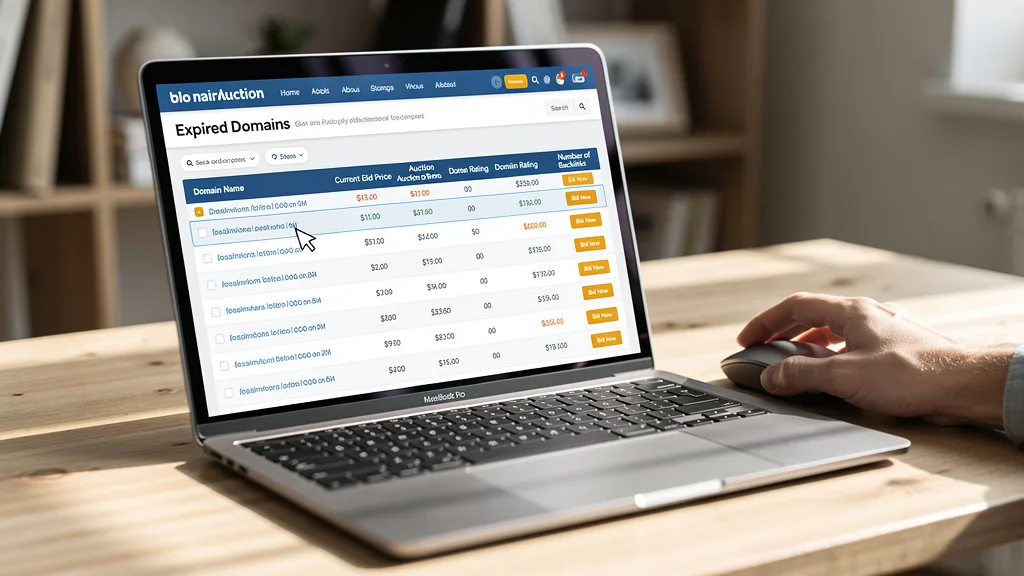
The core concept is to leverage the pre-existing SEO value of old domains. Instead of starting a new website from scratch with zero authority, you acquire a domain that already has a history of being trusted by Google. This allows you to bypass the time-consuming process of natural link acquisition and gives you a significant advantage in competitive niches.
Understanding PBN Link Building
PBN link building is the practice of placing contextual links from the websites within your private network to your main business website, or "money site." Because you control every aspect of the PBN sites, you can dictate the exact anchor text, the placement of the link on the page, and the surrounding content. This level of control is unparalleled compared to other link building methods like guest posting or outreach.
The goal is to make these links appear as natural, editorial endorsements. A well-managed PBN link looks identical to a genuine link from a real, independent blog. This involves creating high-quality, relevant content on your PBN sites and ensuring that you are not just linking out to your money site but also to other non-competing authority sources to create a natural outbound link profile.
The Role of PBNs in Modern SEO Strategy
In 2026, the role of PBNs in SEO is a topic of intense debate. Google's official guidelines explicitly state that any links intended to manipulate PageRank are a violation of their policies. Consequently, using PBNs is considered a gray-hat or even black-hat tactic that carries inherent risks, including severe ranking penalties if the network is discovered. Many SEO professionals advocate for safer, white-hat alternatives.
Despite the risks, some advanced SEOs continue to use PBNs because of the speed and power they can deliver, especially in highly competitive industries like iGaming or finance. The ability to build powerful, relevant links on demand can provide a crucial ranking boost that is difficult to achieve through other means. However, success hinges entirely on the ability to build and manage the network without leaving any detectable footprints.
Pros and Cons of Building a PBN in 2026
Deciding to build a PBN is a significant commitment that requires a clear understanding of both the potential rewards and the substantial risks. While the allure of controlling your own link equity is strong, the consequences of a poorly executed network can be devastating for your business. Carefully weighing these factors is essential before you invest time and money into this strategy.

The primary appeal lies in the direct control over your link building efforts, allowing for precise targeting and quick results. On the other hand, the constant threat of Google penalties and the significant resources required for proper maintenance are major deterrents. This section breaks down the key advantages and disadvantages you must consider.
Potential SEO Benefits and Control
The most significant advantage of a PBN is the absolute control it provides. You decide everything: the anchor text of your links, the relevancy of the content they are placed in, and the exact page they link to. This allows you to create a highly optimized backlink profile tailored to your specific SEO goals. You don't have to negotiate with webmasters or wait for outreach campaigns to yield results.
Furthermore, because you are using domains with pre-existing authority, the links can have an immediate and powerful impact on your money site's rankings. This speed can be a game-changer in fast-moving markets. You can quickly target new keywords or bolster the authority of important pages without relying on external factors, giving you a competitive edge that is hard to replicate with other methods.
Significant Risks and Google Penalties
The biggest con is the risk of a Google penalty. If Google identifies your network of sites, it can de-index every site within the PBN and issue a manual action penalty against your money site. Recovering from such a penalty is incredibly difficult and can effectively erase your search visibility overnight. This is why avoiding footprints is the most critical aspect of building a PBN.
"While many are tempted by the power of a PBN, the risk of a manual penalty from Google is very real in 2026. A single mistake in setup can unravel years of work. For most businesses, safer alternatives like niche edits or curated guest posts offer a much better risk-to-reward ratio."
Beyond penalties, PBNs are expensive and time-consuming to build and maintain correctly. The costs of acquiring quality domains, paying for diversified hosting, and creating unique content add up quickly. This is not a set-it-and-forget-it strategy; it requires constant vigilance and ongoing investment to remain effective and undetectable. For many, exploring the differences between PBNs vs guest posts vs niche edits reveals more sustainable paths to authority.
Step 1: Finding and Acquiring Expired Domains
The foundation of any strong PBN is the quality of its domains. Your goal is to find expired domains that have a clean history and strong, pre-existing authority metrics. This is the most crucial step, as a network built on weak or spammy domains will provide little value and may even harm your money site. It requires careful research and due diligence.

The process involves identifying domains with good SEO metrics, thoroughly vetting their history to ensure they were not used for spam in the past, and finally purchasing them through various marketplaces. Rushing this stage is a common mistake that can doom a PBN from the start. Taking the time to source high-quality domains is a non-negotiable part of the process.
Key Metrics for a Quality Expired Domain
When evaluating potential domains, you should focus on a specific set of metrics to gauge their quality and power. These indicators help you separate valuable assets from worthless or toxic domains. Relying on just one metric is a mistake; a holistic view is necessary for an accurate assessment.
- Domain Authority (DA) / Domain Rating (DR): Look for scores from Moz (DA) or Ahrefs (DR) that are 20+ as a general baseline, though higher is better.
- Trust Flow (TF) / Citation Flow (CF): Majestic's metrics are crucial. A high Trust Flow (15+) and a TF/CF ratio close to 1 (e.g., TF 20 / CF 25) indicate a trustworthy backlink profile.
- Backlink Profile: Analyze the quality and relevance of the links pointing to the domain. You want links from real, authoritative sites in a relevant niche, not spammy directories or comment sections.
- Referring Domains: The number of unique websites linking to the domain is a strong indicator of its authority.
- Indexed Status: Check if the domain is still indexed in Google. A de-indexed domain is a major red flag.
How to Check a Domain's History for Spam
Before purchasing any domain, you must thoroughly investigate its past. A domain that was previously used for spam, adult content, or gambling (unless that's your niche) can carry a negative history that will undermine your efforts. Use tools like the Wayback Machine (Archive.org) to see snapshots of the site's content over the years. Look for foreign languages, spammy keywords, or illicit content.
Additionally, use SEO tools like Ahrefs or SEMrush to analyze the domain's historical backlink profile and anchor text. A large number of spammy links from irrelevant sources or over-optimized anchor text are clear warning signs. The goal is to find a domain with a clean, natural history that you can build upon. This process helps you build a private blog network that is stable and effective.
Top Marketplaces for Purchasing Domains
Once you have a list of potential domains that have passed your vetting process, you need to acquire them. There are several marketplaces where you can find and purchase expired or expiring domains. Each platform has its own auction style and inventory, so it's often worth monitoring several of them.
Some of the most popular marketplaces include GoDaddy Auctions, which has a vast inventory of expiring domains. DropCatch and NameJet are services that specialize in catching domains the moment they become available to the public, often referred to as "dropping." For pre-vetted, high-metric domains, you might look at specialized brokers, though these come at a premium price.
Step 2: Setting Up Footprint-Free PBN Hosting
After acquiring your domains, the next critical step is setting up hosting. This is where many people make fatal mistakes that lead to the discovery of their network. The goal is to make each website in your PBN appear as if it is a completely separate, independent entity owned and operated by different people. This means you cannot host them all in the same place or use services that leave obvious connections.

Diversifying your hosting setup is non-negotiable. Using a single hosting account for all your PBN sites creates a massive, easily detectable footprint. Search engines can easily connect the dots if all your sites share the same IP address, nameservers, or server infrastructure. Investing in a footprint-free hosting strategy is essential for the long-term survival of your network.
Why Unique, Diversified Hosting Is Critical
The entire principle of a PBN is to simulate a network of independent websites. If all your sites are hosted on the same shared server from a major web host, they will all share the same IP address or be on the same C-block IP range. This is the digital equivalent of putting up a giant sign that says, "All these sites are owned by the same person."
Google and other search engines are adept at identifying these patterns. A single point of connection can compromise your entire network. Therefore, each site in your PBN should ideally have a unique IP address from a different IP block. This diversification is what makes the network appear natural and prevents search engines from easily linking the sites together. highly competitive industries like iGaming.
Exploring Different PBN Hosting Solutions
There are several ways to achieve hosting diversification. The easiest, though often more expensive, method is to use specialized PBN hosting providers. These companies are designed specifically for this purpose and automatically distribute your websites across a wide range of different data centers, IPs, and even hosting companies.
A more hands-on but cost-effective approach is to use multiple cloud hosting providers like Amazon Web Services (AWS), DigitalOcean, Vultr, and Google Cloud. You can spin up small, individual servers for each of your PBN sites, giving each one a unique IP. Another option is to purchase multiple cheap, shared hosting plans from different reputable companies, ensuring that no two sites are on the same provider.
Avoiding Common Hosting and IP Footprints
Beyond using different IP addresses, you must avoid other technical footprints. Here is a list of common mistakes to avoid:
- Shared Whois Information: Never use the same registration details (name, email, address) for your PBN domains. Always use a different, unique Whois privacy service for each domain.
- Same Nameservers: Do not point all your domains to the same custom or hosting nameservers. Mix it up by using the default nameservers of each hosting provider or different DNS services like Cloudflare for some sites.
- Same Google Analytics/Search Console ID: Do not use the same tracking IDs across your PBN sites or link them all to a single Google account. In fact, it's best to avoid using Google products on your PBN sites altogether.
- Interlinking PBN Sites: Never link one PBN site to another PBN site in your network. This creates an obvious connection and is a classic footprint.
Step 3: Designing and Building Your PBN Sites
Once your domains are secured and your hosting is set up, it's time to build the actual websites. The objective is to make each site look and feel like a legitimate, real blog. This means avoiding shortcuts and investing the effort to create unique designs, structures, and content for every site in your network. A collection of identical-looking sites is a massive red flag.
This stage involves everything from choosing themes and plugins to creating believable author personas and publishing valuable content. The more authentic and unique each site appears, the lower your risk of detection. This is not the place to cut corners; the quality of your site builds is directly proportional to the longevity of your network.
Using Different Themes and Site Structures
Each website in your PBN must be visually distinct. Using the same WordPress theme, even with different colors, across multiple sites is a footprint. Instead, use a wide variety of free and premium themes from different developers. Mix up the site layouts; some might have a sidebar, others might be full-width. Use different navigation menus, footers, and page structures.
Furthermore, don't use WordPress for every single site. While it is the most convenient platform, mixing in other content management systems like Ghost, Joomla, or even simple static HTML sites can add another layer of diversification. The goal is to create a portfolio of websites that looks like it was built by many different people with different preferences and technical skills.
Creating Unique Content and Author Personas
Content is the heart of your PBN sites. Each site needs to have unique, readable, and relevant content related to the original topic of the expired domain. Using low-quality, spun, or AI-generated content without heavy editing is a recipe for disaster. Invest in well-written articles that provide some value to a reader. A good starting point is to add 5-10 pages of content, including an About page, a Contact page, and a Privacy Policy, to make the site look legitimate. white-hat alternatives.
To further enhance authenticity, create a unique author persona for each site. This includes a name, a short bio, and perhaps a stock photo. This simple step makes the blog feel more personal and real. The content should be published gradually over time, not all at once, to simulate the natural growth of a real blog.
Essential Plugins for PBN Management
If you are using WordPress, a few key plugins can help you manage your sites while remaining discreet. However, it's crucial not to use the exact same plugin stack on every site, as this can also be a footprint. A security plugin like Wordfence or Sucuri is important to prevent your sites from being hacked. A basic SEO plugin like Yoast or Rank Math can help with on-page optimization, but avoid connecting them to any central accounts.
For content, use a simple classic editor plugin if you prefer it over the block editor. Caching plugins like W3 Total Cache or WP Super Cache can help with site speed, but again, vary which ones you use. The most important rule is to avoid any plugins that centralize management or require a connection to an external service that could link your sites together.
Step 4: Linking to Your Money Site Strategically
With your PBN sites built and populated with content, you can now begin the final and most important step: linking to your money site. This is the entire reason you built the network, but it must be done with precision and subtlety. Blasting your money site with dozens of exact-match anchor text links is a surefire way to get penalized. The art of PBN linking is to make the links appear as natural and editorial as possible.
This involves careful planning of your outbound linking strategy, ongoing maintenance to keep the network healthy, and diligent monitoring to catch any issues before they escalate. A successful PBN is not a one-time project but an ongoing asset that requires continuous management to deliver long-term value.
Best Practices for Contextual Outbound Links
When linking from your PBN to your money site, follow these best practices to maximize effectiveness and minimize risk:
- Link Contextually: Place your link within the body of a relevant article. The link should make sense in the context of the sentence and the paragraph.
- Vary Anchor Text: Avoid overusing exact-match keywords. Use a mix of branded anchors (your company name), naked URLs (www.yoursite.com), generic anchors ("click here," "read more"), and partial-match or long-tail keyword anchors. A natural backlink profile is diverse.
- Link Out to Authority Sites: On the same page where you link to your money site, also include 1-2 outbound links to other high-authority, non-competing websites (like Wikipedia, Forbes, or a major news site). This makes your outbound link profile look natural.
- Drip Links Slowly: Don't add links from all your PBN sites at once. Add them gradually over weeks or months to simulate a natural pace of link acquisition.
Maintaining Your PBN for Long-Term Success
A PBN is like a garden; it requires regular care. To ensure your network remains powerful and undetected, you must perform ongoing maintenance. This includes periodically adding new content to your sites to keep them fresh. A blog that hasn't been updated in two years looks abandoned and suspicious. Even one new article every few months can make a difference.
You also need to keep the underlying software, themes, and plugins updated to patch security vulnerabilities. A hacked PBN site can get de-indexed or, worse, start linking to spammy sites, which devalues your asset. Regular maintenance ensures your investment continues to pay dividends for years to come.
Monitoring Network Health and Performance
Constant monitoring is crucial for managing risk. You should regularly check to ensure all your PBN sites remain indexed in Google. You can do this with a simple `site:yourpbndomain.com` search. If a site gets de-indexed, you must remove the link to your money site from it immediately to prevent any negative association.
It's also wise to monitor the uptime of your sites and keep an eye on their backlink profiles. Sometimes, PBN sites can attract spammy links on their own, which you may need to disavow. Using a rank tracker can also help you correlate the addition of PBN links with ranking improvements on your money site, allowing you to gauge the effectiveness of your network.
Estimating the Cost to Build a PBN Network
Building a PBN is a significant financial investment, and underestimating the costs is a common pitfall. The total expense can vary dramatically based on the quality of domains you purchase, your hosting choices, and your approach to content creation. A clear budget is essential before you begin, as this is not a cheap endeavor if done correctly.
The primary costs can be broken down into three main categories: domain acquisition, hosting and maintenance, and content. Understanding the potential expenses in each area will help you plan your budget and determine the scale of the network you can realistically afford to build and maintain. This is a crucial step for anyone learning how to build a PBN network.
| Cost Category | Description | Estimated Annual Cost |
|---|---|---|
| Domain Acquisition | Cost to purchase 10 quality expired domains at auction. | $500 - $3,000+ (one-time) |
| Domain Renewals | Annual renewal fees for 10 domains. | $150 - $250 |
| PBN Hosting | Monthly cost for diversified, footprint-free hosting for 10 sites. | $360 - $1,200 |
| Content Creation | Cost for 5 initial articles per site (50 articles total). | $1,000 - $5,000+ |
| Total Year 1 Cost | Sum of all initial and ongoing costs for the first year. | $2,010 - $9,450+ |
Domain Acquisition and Renewal Costs
The cost of expired domains is highly variable. You might find a decent domain in an auction for $50, while a premium domain with a powerful backlink profile could cost thousands of dollars. For a small PBN of 10 sites, a reasonable budget for acquisition might be between $500 and $3,000. After the initial purchase, you must also budget for annual renewal fees, which typically range from $15 to $25 per domain.
It is tempting to save money by buying cheap, low-quality domains, but this is a mistake. The power of your PBN is directly tied to the authority of its domains. Investing in better domains from the start will yield far better results and is a more efficient use of your capital in the long run.
Monthly Hosting and Maintenance Expenses
Hosting costs will be a recurring monthly expense. Using specialized PBN hosting services can cost anywhere from $3 to $10 per site per month. For a 10-site network, this translates to $30 to $100 per month. If you opt for individual cloud servers or separate shared hosting plans, the cost can be similar or slightly higher, depending on the providers you choose.
You should also factor in the cost of your time or the cost of hiring a virtual assistant for maintenance tasks like updating plugins and monitoring site health. While this may not be a direct cash expense if you do it yourself, it is an important resource commitment to consider.
Budgeting for Content Creation
Content is often the most expensive component of building a PBN. To make each site look legitimate, you'll need several pages of unique, well-written content. If you plan for five 500-word articles per site, a 10-site network requires 50 articles. The cost of content can range from $20 per article from a budget writer to $100+ for high-quality work. Therefore, your initial content budget could be anywhere from $1,000 to $5,000 or more.
While you can write the content yourself to save money, it is an extremely time-consuming task. Many PBN builders find that outsourcing content creation is a necessary expense to allow them to scale their network and focus on more strategic aspects of the project. Some may even seek out specialized link building for their industry, such as backlinks for Crypto and Web3, where content quality is paramount.
Key Takeaways
Building and managing a private blog network is a complex and high-stakes SEO strategy. As you consider whether this approach is right for you, keep these essential points in mind. Success with a PBN in 2026 depends entirely on meticulous execution and a deep understanding of the risks involved.
- PBNs Offer Unmatched Control: The primary benefit is total control over your link building, including anchor text, link placement, and timing, which can lead to rapid ranking improvements.
- High Risk of Penalties: PBNs are a violation of Google's guidelines. If discovered, your network can be de-indexed and your money site penalized, potentially wiping out your search traffic.
- Footprints Are the Enemy: The key to long-term success is avoiding footprints. This requires diversifying domains, hosting, site designs, content, and linking patterns.
- It's an Expensive Investment: Be prepared for significant costs related to acquiring quality domains, paying for footprint-free hosting, and creating unique content. This is not a low-budget strategy.
- Maintenance is Non-Negotiable: A PBN requires ongoing maintenance, including content updates, security monitoring, and performance tracking, to remain effective and safe.
Frequently Asked Questions
Are PBNs still effective for SEO in 2026?
Yes, PBNs can still be highly effective for SEO in 2026, but their effectiveness is directly tied to the quality of execution. A well-built, carefully managed PBN with high-authority domains and no footprints can provide significant ranking boosts. However, the risks are higher than ever, and a poorly constructed network is more likely to be penalized than to provide any benefit.
What are the main alternatives to using a PBN for link building?
The debate on their efficacy continues because when they work, they work exceptionally well. They are most often used in highly competitive niches where traditional link building is slow or insufficient. For most businesses, the risk-to-reward ratio makes safer alternatives a more prudent choice.
How many sites do you need for a small PBN?
There are several effective, white-hat alternatives to PBNs. The most popular methods include guest posting on authoritative blogs in your niche, and HARO (Help a Reporter Out) link building, where you provide quotes to journalists in exchange for a link. Another powerful strategy is creating high-quality linkable assets, like original research or free tools, that attract links naturally.
Can you buy PBN links instead of building a network?
Additionally, services like niche edits or link insertions, where you get a link added to an existing, relevant article, offer a safer way to gain powerful contextual links. These methods are generally considered more sustainable and carry a much lower risk of penalties from Google.
How long does it take to build a functional PBN?
A common starting point for a small but effective PBN is between 10 and 15 sites. This size is manageable for a single person or small team and can provide enough linking power to see a noticeable impact on a money site in a moderately competitive niche. Starting smaller, with even 5 sites, is possible, but the impact will be limited.
It's better to have a smaller network of high-quality, powerful domains than a large network of cheap, weak ones. The quality of the domains always trumps the quantity. As you become more experienced and have more resources, you can gradually scale the size of your network.
Yes, you can buy PBN links from various providers. This is often a more accessible option for those who lack the time, budget, or technical expertise to build and manage their own network. Buying links outsources the risk and complexity to a third-party vendor. However, it is crucial to vet these providers carefully, as the quality and safety of their networks can vary dramatically.
When you buy high authority PBN backlinks, you are trusting that the provider has followed all the best practices for avoiding footprints. Ask questions about their hosting, content quality, and linking practices before purchasing. This can be a viable alternative to the extensive process of learning how to build a PBN network yourself.
Building a small, functional PBN of 10-15 sites typically takes several weeks to a few months. The timeline depends heavily on how quickly you can source and acquire high-quality expired domains, which is often the most time-consuming step. Once you have the domains, setting up hosting and building out the initial sites with content can take another 2-4 weeks.
Rushing the process is a common mistake. It's important to take the time to do each step correctly, from domain vetting to site design and content creation. A carefully built network will have a much longer lifespan and deliver better results than one that was hastily thrown together.
Conclusion
This guide on how to build a PBN network has walked you through the intricate, step-by-step process required for this advanced SEO tactic in 2026. From the critical first step of sourcing authoritative expired domains to the complexities of footprint-free hosting and strategic linking, it is clear that building a PBN is not for the faint of heart. It demands a significant investment of time, money, and technical diligence.
The primary takeaways are the importance of quality and diversification at every stage. A successful network is built on strong, clean domains, hosted across a varied digital landscape, and made to look like a collection of genuine, independent websites. The reward is unparalleled control over your link profile, but the risk of a catastrophic Google penalty looms over any misstep. This high-stakes dynamic is why many SEOs now prefer managed services or safer alternatives.
Ultimately, a PBN is a powerful tool in the right hands, but it's also a liability if managed improperly. The complexity and ongoing maintenance can quickly become overwhelming, distracting you from your core business operations. Evaluating whether the potential upside is worth the immense effort and risk is a critical decision for any business or marketer.
If you want the power of high-authority links without the immense risk and workload of building your own network, it may be time to consult an expert. A professional link building plan can help you leverage powerful backlinks safely and effectively. To understand how a tailored strategy can benefit your site, consider reaching out for a personalized assessment. Get a Link Plan today to see how we can help you achieve your ranking goals.