
Are you looking for a powerful way to accelerate your SEO results without waiting months for new content to rank? Finding the right link building strategy can be the difference between stagnating and dominating the search results. This guide provides a complete roadmap for mastering one of the most effective tactics available today.
To find niche edit opportunities, you can use a combination of manual methods and specialized SEO tools. Manually, use advanced Google search operators to find relevant articles and monitor for unlinked brand mentions. For a more scalable approach, tools like Ahrefs and SEMrush allow you to analyze competitor backlink profiles and discover pages that already link to similar content, creating a perfect list of prospects for outreach.
A niche edit, also known as a link insertion or a curated link, is the process of adding your hyperlink into an existing, aged piece of content on another website. Unlike a guest post where you provide entirely new content, a niche edit leverages the authority and relevance of an article that has already been published, indexed, and may have even acquired its own backlinks over time. The goal is to place your link within a contextually relevant sentence, making it appear natural and valuable to readers.

This link building technique is highly sought after because it can pass link equity and ranking signals much faster than new content. Since the host page is already established in Google's index, the impact of the new link can be felt more immediately. The key is to ensure the link adds genuine value to the existing article, enhancing the information for the reader rather than simply being a promotional placement. This is a core component of many successful monthly link building packages.
While both niche edits and guest posts are powerful link building strategies, they serve different purposes and have distinct advantages. A guest post involves writing a new article for another website to earn a backlink, which is excellent for building brand authority and reaching new audiences. A niche edit, however, is a more direct and often faster way to gain link equity from an already authoritative page.
Understanding these differences helps you decide which strategy is best for your current SEO goals. If you need to build foundational authority and demonstrate expertise, guest posting is ideal. If you want to give a specific page a quick ranking boost by leveraging existing content, a niche edit is often the superior choice. Many comprehensive SEO campaigns use a mix of both, which you can explore in our guide on Niche Edits vs Guest Posts.
| Feature | Niche Edit (Link Insertion) | Guest Post (New Article) |
|---|---|---|
| Implementation Speed | Fast. The link is added to existing content. | Slow. Requires content creation, editing, and publishing. |
| SEO Impact Speed | Often faster, as the page is already indexed and aged. | Slower, as the new page needs to be indexed and gain authority. |
| Content Control | Low. You only control the link and anchor text. | High. You create the entire article and context. |
| Cost | Typically lower, as no new content is created. | Often higher, factoring in writing and placement fees. |
| Scalability | Highly scalable through targeted outreach. | Less scalable due to content production bottlenecks. |
The Core Benefits of Niche Edits for Your SEO Strategy
Integrating niche edits into your SEO strategy can deliver significant and rapid improvements to your site's performance. By securing links on pages that Google already trusts, you are tapping into a pre-existing stream of authority. This makes it a highly efficient tactic for those looking to grow keyword rankings and enhance their site's overall backlink profile without the long lead times associated with content-heavy campaigns.
The primary advantage lies in the age and authority of the source page. A link from a five-year-old article that consistently ranks for relevant keywords and has its own set of quality backlinks is immensely more valuable than a link from a brand-new post on a similar domain. This inherited authority can provide an immediate lift to your target page's visibility and search rankings.
Boost Keyword Rankings and Organic Traffic
One of the most immediate benefits of a well-placed niche edit is the direct impact on your keyword rankings. When you add a relevant link from an authoritative page, you send a strong signal to search engines that your content is a valuable resource on that topic. This infusion of 'link juice' and topical relevance can push your target page higher in the SERPs for its primary and secondary keywords.
This boost in rankings naturally leads to an increase in organic traffic. As your page becomes more visible for valuable search terms, more users will click through to your site. This creates a positive feedback loop where higher traffic can further reinforce your page's authority, leading to sustained growth and improved conversions and revenue.
Build Authority with Links from Established Content
Acquiring backlinks from pages that have stood the test of time is a cornerstone of building domain authority. These aged pages have a history of providing value and have likely accumulated authority signals over years. Placing your link on such a page allows you to benefit from that established trust and credibility in the eyes of Google.
In 2026, a single niche edit from a relevant, high-authority page can deliver more immediate ranking power than a brand new guest post. It's about borrowing established authority to accelerate your own.
This is particularly effective for newer websites or pages struggling to gain traction. Instead of starting from zero, you are effectively piggybacking on the success of another piece of content. This strategy is central to acquiring high DR backlinks that can significantly move the needle on your SEO performance.
While SEO tools offer scalability, manually prospecting for opportunities can uncover hidden gems that automated systems might miss. Manual searches allow for a deeper, more nuanced evaluation of a site's quality and relevance. This hands-on approach is perfect for finding your first few placements or for targeting very specific, high-value websites in your industry.

The process involves using smart search techniques, analyzing your competitors, and keeping an eye out for mentions of your brand that don't yet link back to you. These methods require more effort but often yield higher success rates due to the personalized nature of the outreach that follows.
Using Advanced Google Search Operators
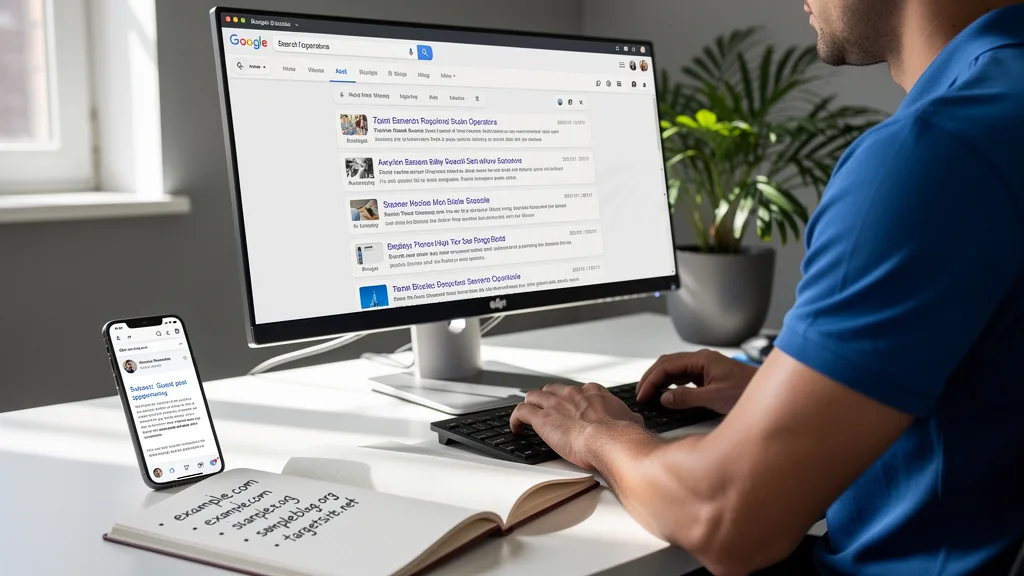
Google's own search engine is a powerful tool for finding link building opportunities if you know how to use it correctly. Advanced search operators allow you to refine your search to find exactly what you're looking for. By combining your target keywords with these operators, you can quickly build a list of relevant articles that might be open to adding your link.
Here are some effective search operators for finding niche edit prospects:
"your keyword" + "resources"- Finds resource pages that list helpful links."your keyword" + intitle:"best tools for"- Locates listicles and review articles.site:.com "your keyword" -"your brand"- Searches for mentions of your topic on sites that haven't mentioned you yet.intitle:"your keyword" inurl:"blog"- Narrows results to blog posts with your keyword in the title.
Analyzing Competitor Backlink Profiles for Ideas
Your competitors have already done some of the hard work for you. By analyzing their backlink profiles, you can identify the websites that are already linking to content similar to yours. This is a highly effective strategy because you know these sites are open to linking to resources in your niche. You can use tools like Ahrefs or SEMrush to export a list of your competitor's backlinks.
Once you have the list, filter it to find in-content links that are not from guest posts or sponsored content. Look for links within the body of articles. These are your prime niche edit targets. Your goal is to reach out to these same websites and propose adding your superior, more up-to-date resource as an additional link, or as a replacement for a broken or outdated one.
Monitoring Brand Mentions That Are Not Linked
An unlinked brand mention is when a website writes about your company, product, or content but doesn't include a hyperlink back to your site. This is one of the easiest link building opportunities available. The author is already aware of your brand and found it valuable enough to mention, so asking for a link is a natural and often successful request.
You can use tools like Google Alerts, Brand24, or Ahrefs' Alerts feature to monitor the web for mentions of your brand name. When you find an unlinked mention, you can reach out with a polite email thanking them for the mention and suggesting they add a link to make it easier for their readers to find you. It's a warm lead that removes much of the friction from typical cold outreach.
Top SEO Tools for Finding Niche Edits in 2026
To scale your efforts and find opportunities efficiently, you need to leverage the power of modern SEO software. These tools automate the discovery process, analyze massive amounts of data, and provide the metrics you need to qualify prospects quickly. For anyone serious about how to find niche edit opportunities at scale, these tools are indispensable.
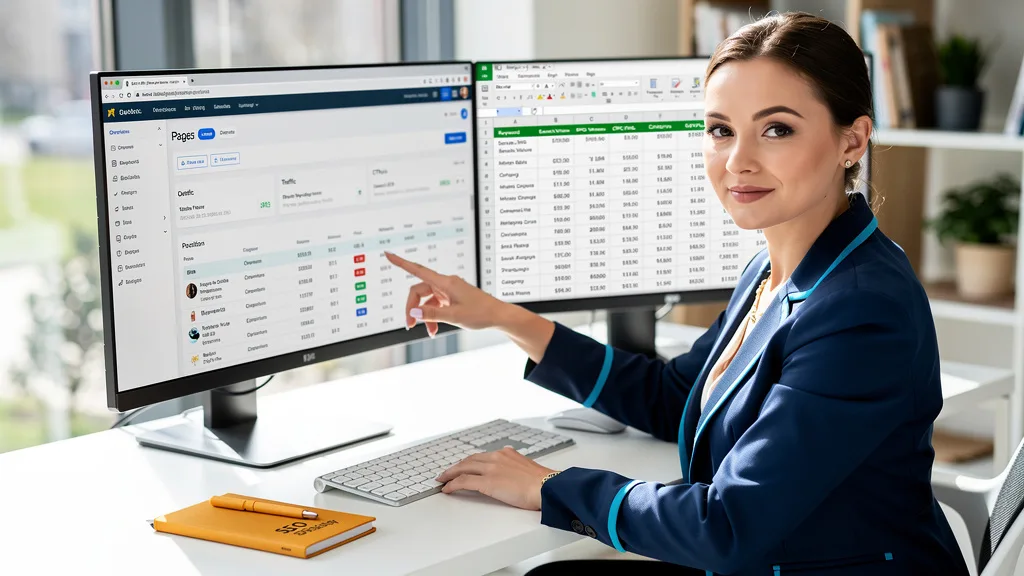
The leading platforms offer robust features for backlink analysis, content research, and competitor intelligence. By mastering one or two of these tools, you can build a consistent pipeline of high-quality link prospects to fuel your SEO growth throughout 2026 and beyond.
Ahrefs Content Explorer and Site Explorer
Ahrefs is a go-to tool for many SEO professionals. Its Site Explorer feature allows you to enter any competitor's domain and see their entire backlink profile. You can filter for "in-content" links and sort by metrics like Domain Rating (DR) or page traffic to prioritize the best opportunities. This is the fastest way to reverse-engineer your competitors' success.
Additionally, Ahrefs' Content Explorer is a massive database of web content. You can search for your keyword and find all the articles written on that topic. You can then filter for pages that have high traffic but don't link to you, giving you a ready-made list of outreach targets. You can also find pages with broken links, providing an easy reason to reach out with your content as a replacement.
SEMrush Backlink Analytics Tool
SEMrush offers a powerful suite of tools that are highly effective for finding niche edit placements. The Backlink Analytics tool functions similarly to Ahrefs, allowing you to spy on competitor backlinks. A key feature is the Backlink Gap tool, where you can enter your domain and up to four competitors' domains. SEMrush will then show you all the websites that link to your competitors but not to you.
This targeted list is incredibly valuable because it consists of websites proven to link to your direct rivals. You can export this list, vet the prospects for quality and relevance, and begin your outreach campaign with a high degree of confidence that these sites are relevant to your industry.
BuzzSumo for Content Research
While often seen as a content marketing tool, BuzzSumo is also excellent for link prospecting. You can use it to find the most shared and linked-to content for any given topic. These highly popular articles are often on authoritative sites and are perfect candidates for a niche edit. Since these articles are already proven winners, a link from them carries significant weight.
You can search for your keywords and sort the results by the number of backlinks. This instantly reveals the top-performing content in your niche. From there, you can visit each page, assess its relevance, and determine if there's a natural spot to add your link before reaching out to the site owner or editor.
How to Qualify Good Niche Edit Prospects
Finding potential opportunities is only half the battle. The next crucial step is to qualify these prospects to ensure you're only pursuing links that will help, not harm, your SEO. A bad link from a spammy or irrelevant website can be detrimental. Taking the time to properly vet each opportunity is non-negotiable for a sustainable niche edits & link insertion service.
A good prospect is a website that is topically relevant to your own, has genuine organic traffic, and features a specific page where your link would add real value to the reader. It's a multi-faceted evaluation that looks beyond simple domain metrics.
Assessing Domain Authority and Website Relevance
The first check is for relevance and authority. The website's overall theme should be closely related to your own. A link from a high-authority site in a completely unrelated niche will have minimal impact and can even look unnatural to Google. For example, if you run a finance blog, a link from another finance site is far more valuable than a link from a food blog, regardless of its domain metrics.
Once relevance is confirmed, look at authority metrics like Ahrefs' Domain Rating (DR) or Moz's Domain Authority (DA). While these are third-party metrics, they provide a quick gauge of a site's backlink profile strength. Aim for sites with metrics at least comparable to your own, but remember that relevance always trumps raw authority scores.
Checking for Healthy Organic Traffic Levels
A high DR with no organic traffic is a major red flag. It could indicate that the site is part of a private blog network (PBN), has been penalized by Google, or is propped up by spammy links. A healthy website should have a steady or growing stream of organic traffic, which you can estimate using tools like Ahrefs or SEMrush.
Traffic is proof that Google trusts the site and finds its content valuable enough to show to users. A link from a site with real, engaged readers is significantly more powerful than a link from a site that exists only for SEO purposes. This is a critical step in learning how to buy niche edits safely.
Evaluating Page-Level Context and Potential Link Placement
Finally, drill down to the specific page where you hope to place your link. Read the article and ask yourself: Is there a natural, logical place for my link? Would adding my link genuinely improve the article for the reader? Forcing a link where it doesn't belong is a quick way to get your outreach email deleted. A good discussion on how to tell what niche edits are good or bad can be found in community forums.
Look for opportunities to add more depth, provide a source for a claim, or offer a useful tool or resource. Your proposed link should be an enhancement, not an interruption. The more value you can demonstrate in your outreach, the higher your chances of success with Niche Edits (Link Insertions).
Crafting Outreach Emails That Get a 'Yes'
Once you've found and qualified your prospects, the final step is outreach. This is where many link building campaigns fail. Sending generic, templated emails will result in low response rates and wasted effort. A successful outreach email is personalized, concise, and clearly communicates the value you are offering to the site owner.
Your goal is to start a conversation, not just demand a link. Treat the site owner as a potential partner, not just a target. Show that you've actually read their content and have a genuine reason for contacting them. This approach builds relationships and dramatically increases your chances of getting that coveted 'yes'.
Writing a Compelling and Personalized Subject Line
The subject line is your first impression. If it looks like spam, your email will be deleted without being read. Avoid generic titles like "Link Request" or "Collaboration Opportunity." Instead, make it personal and specific to the recipient.
Here are some effective subject line formulas:
- Quick question about your post on [Article Topic]
- A resource for your "[Article Title]" article
- Loved your article on [Website Name]
- Broken link on your [Topic] page?
Structuring the Email Body to Provide Clear Value
Your email should be easy to scan and get straight to the point. Webmasters are busy people and don't have time to read long, rambling pitches. A proven structure is to start with a genuine, personalized compliment about their content, briefly introduce your own resource, explain exactly where it would fit and why it adds value, and end with a simple, low-pressure call to action.
Always focus on what's in it for them. Will your link make their article more comprehensive? Does it provide a useful statistic or a helpful tool for their readers? Frame your request as an improvement to their existing content, not as a favor to you. This value-first approach is fundamental to successful outreach.
Effective Outreach Templates You Can Adapt
While you should personalize every email, starting with a solid template can save time and ensure you include all the necessary elements. Here is a basic template you can adapt. Remember to customize the bracketed sections for each prospect.
Subject: Quick question about your post on [Article Topic]
Hi [Name],
I was doing some research on [Topic] today and came across your excellent article: "[Article Title]".
I really enjoyed your point about [Specific detail from their article]. It was a great insight.
While reading, I noticed you mentioned [Related concept]. I actually just published an in-depth guide on [Your Topic] that covers [Specific value-add, e.g., 'the latest 2026 data on this']. I thought it might be a valuable addition for your readers.
Would you be open to adding a link to it in your article? Here is the link for you to review: [Your URL]
Either way, keep up the great work!
Best,
[Your Name]
Key Takeaways
Mastering how to find niche edit opportunities is a game-changer for any SEO strategy. By focusing on quality and relevance, you can build powerful backlinks that drive real results. Here are the key points to remember:
- Niche Edits Are Powerful: They leverage the authority of existing, aged content to deliver fast SEO impact.
- Prospecting is Key: Use a mix of manual Google searches and powerful SEO tools like Ahrefs and SEMrush to build a list of targets.
- Qualification is Non-Negotiable: Always vet prospects for relevance, organic traffic, and overall site health to avoid low-quality or harmful links.
- Personalized Outreach Wins: Craft compelling, value-driven emails that are personalized to each prospect to maximize your success rate.
- Focus on Value: Your proposed link should always enhance the host article and provide real value to its readers.
Frequently Asked Questions
What is the difference between a niche edit and a curated link?
There is generally no difference between a niche edit and a curated link. Both terms refer to the same link building practice: inserting a hyperlink into an existing, relevant piece of content on another website. The term "curated link" emphasizes that the link is being added to a carefully selected, or curated, piece of content, but the process and outcome are identical to a niche edit or link insertion.
How much do niche edits typically cost?
The cost of niche edits can vary widely, from under $100 to over $1000 per link. The price depends on several factors, including the website's Domain Rating (DR), organic traffic levels, niche competitiveness, and whether you are sourcing it through an agency or directly. High-authority sites in competitive niches like finance or iGaming will command much higher prices. You can see examples on our link building services & pricing page.
Are paid niche edits considered a black hat SEO tactic?
This falls into a gray area of SEO. Google's official guideline is that any link paid for should be marked with a `rel="sponsored"` or `rel="nofollow"` attribute. However, the vast majority of paid niche edits are implemented as dofollow links without disclosure. While there is inherent risk, it is a widely practiced and effective strategy when done correctly. The key is to focus on high-quality, relevant sites where the link adds genuine value, making it indistinguishable from a naturally earned link.
How do I find my content niche?
Finding your content niche involves identifying a specific topic area where you can become an authority. Start by exploring subjects you are passionate and knowledgeable about. Then, conduct keyword research to see if there is an audience searching for that topic. Analyze the competition to find gaps or underserved areas. A good niche sits at the intersection of your expertise, audience interest, and a viable level of competition.
What is the best niche for beginners?
The best niche for a beginner is typically one with low to medium competition that aligns with a personal interest or hobby. Passion projects are easier to sustain. Look for niches with active online communities (like forums or subreddits) but without dominant, high-authority corporate websites controlling the top search results. Niches like specific hobbies (e.g., urban gardening, vintage watch collecting) or localized services can be great starting points.
Conclusion
Learning how to find niche edit opportunities is a critical skill for accelerating your SEO success in 2026. By moving beyond basic link building and focusing on inserting valuable links into established, authoritative content, you can achieve faster ranking improvements and drive more qualified organic traffic. The process, from prospecting with tools like Ahrefs to crafting personalized outreach, provides a clear and scalable path to building a powerful backlink profile.
The key takeaways are to prioritize relevance over raw metrics, always verify a site's health through its organic traffic, and approach outreach as a partnership. A well-placed niche edit on a trusted site acts as a strong vote of confidence in your content. By consistently applying these methods, you can systematically enhance your website's authority and climb the search rankings for the keywords that matter most to your business.
While the steps are straightforward, executing a successful niche edit campaign requires significant time, access to expensive tools, and outreach expertise. If you want to accelerate your results and ensure you're only acquiring high-quality, vetted links, our team is here to help. We handle the prospecting, vetting, outreach, and placement so you can focus on your business. Ready to build links that move the needle? Get a Link Plan.