
Are you flying blind with your private blog network, unsure if your sites are indexed, ranking, or even online? Without a robust tracking system, your investment in building a powerful PBN could be delivering zero value. A successful PBN strategy in 2026 depends entirely on diligent monitoring and data-driven adjustments.
A proper PBN indexing tracking configuration is a systematic process for monitoring if your network sites are visible to Google, tracking the keyword rankings of your money sites, and ensuring your PBN domains remain healthy and online. This setup combines indexing services, rank trackers, and uptime monitors into a cohesive workflow, allowing you to verify ROI, catch penalties early, and maximize the power of every link you build.
Understanding PBN Indexing and Why Tracking Is Crucial
Before a PBN site can pass any authority to your money site, its pages must be indexed by search engines like Google. Indexing is the process where Google discovers a URL, analyzes its content, and stores it in its massive database. If a page isn't in the index, it's invisible to the search engine and, for all practical purposes, does not exist. Tracking this status is non-negotiable for any serious SEO campaign.
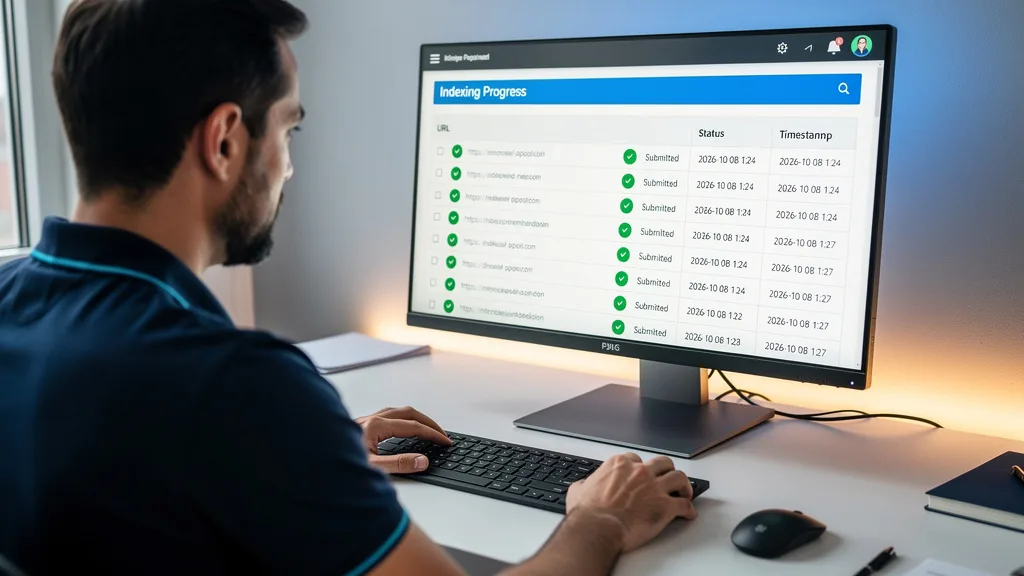
Consistent tracking is the only way to confirm that your network is providing value. It allows you to verify that your links are live and discoverable, which is the entire point of a PBN. Furthermore, it acts as an early warning system. A sudden drop in indexed pages across your network could signal a footprint has been detected or a manual penalty has been applied. Catching these issues early allows you to take corrective action before catastrophic damage is done to your money site's rankings.
"A PBN that isn't indexed is just a collection of expensive, useless websites. Effective PBN indexing tracking configuration is the only way to guarantee your investment is actually working for you and delivering measurable ranking improvements."
Essential Tools for Your PBN Tracking Configuration
Building a reliable tracking system requires a combination of specialized tools. While manual checks are possible for a very small network, they are not scalable or efficient. A professional setup integrates different software types to create a complete picture of your network's health and performance. Each tool serves a distinct but critical function in your overall strategy.

The ideal toolkit automates the most repetitive tasks, freeing you up to focus on analysis and strategy. You'll need solutions for pushing your URLs for discovery, monitoring the SERP impact on your target sites, and ensuring your PBN assets are technically sound and always online. Investing in the right stack is fundamental to running a professional and effective private blog network.
Indexing Services to Accelerate Discovery
Indexing services are designed to speed up the process of getting your PBN posts and pages discovered by Google. These tools work by submitting your URLs through various channels, such as Google's own Indexing API or by building links to your PBN pages from a network of crawled sites. This process encourages Google's bots to visit your new content faster than they might naturally.
When selecting a service, look for one with a high success rate and transparent reporting. Many modern indexers provide a dashboard where you can submit URLs in bulk and track their status from 'submitted' to 'crawled' and finally 'indexed'. While not a guaranteed solution for problematic content, a good indexing service is a powerful accelerator for high-quality PBN sites that are built correctly.
Rank Trackers to Monitor SERP Performance
A rank tracker is essential for measuring the direct impact of your PBN links. These tools automatically check the search engine positions of your money site for a given list of keywords. By monitoring rankings before and after placing a link, you can directly attribute SERP movement to your link-building efforts, thereby calculating the ROI of your network.
Modern rank trackers like Ahrefs, SE Ranking, or SEMrush offer daily updates, track rankings across different devices and locations, and even monitor your competitors. For anyone managing a high authority PBN links campaign, this data is invaluable. It helps you understand which PBN sites are the most powerful and which anchor text strategies are yielding the best results, allowing you to refine your approach over time.
Uptime Monitors and Health Check Tools
A PBN site that is down cannot be crawled by Google and passes zero link equity. Uptime monitors are simple yet critical tools that constantly check if your websites are online. If a site goes down, the tool sends you an immediate alert via email or SMS, allowing you to resolve the hosting issue quickly. Services like UptimeRobot offer generous free plans that are perfect for this task.
Beyond uptime, you need tools to check for de-indexing. This can be done manually by searching `site:yourpbndomain.com` in Google, but specialized tools can perform these checks in bulk across your entire network. These health checks are your primary defense against widespread network penalties, helping you identify and remove problematic sites deindexed by Google before they can harm your money site. iGaming & Casino PBN Links.
Setting up a comprehensive tracking system involves a series of methodical steps. This process transforms your PBN from a loose collection of websites into a managed asset with measurable performance indicators. By following this guide, you can create a robust framework for monitoring every critical aspect of your network's health and effectiveness.

This is not a one-time setup but an ongoing process of data collection and analysis. The goal is to create a dashboard that gives you an at-a-glance overview of your entire operation, from the indexation status of individual posts to the ranking impact on your most important keywords. This is the definitive guide to building a system that provides clarity and control.
Step 1: Prepare Your PBN Sites for Optimal Indexing
Before you even think about tracking, you must ensure your PBN sites are built to be indexed. This starts with high-quality, unique content that provides some level of value. Avoid thin or spun articles at all costs. Each site should have a clean structure, essential pages like 'About' and 'Contact', and a logical internal linking profile.
Technical SEO basics are also crucial. Ensure your `robots.txt` file isn't accidentally blocking Googlebot and that you have a clean XML sitemap submitted. A proper PBN site warm up period is vital; you should publish several non-linked posts over weeks or months to establish the site as a legitimate entity before you place your first money link. Rushing this step is a common reason for indexing failure.
Step 2: Select and Configure Your Indexing Service
Once your content is live, it's time to give it a nudge. Choose a reputable indexing service and familiarize yourself with its submission process. Most professional services will provide an API key that allows for automated submissions, or a web interface for uploading URLs in bulk via a .txt or .csv file.
Integrate this step into your content publishing workflow. As soon as a new post with a money link is published on your PBN, submit its URL to the indexing service. Keep track of the submission date so you can monitor how long it takes for the URL to appear in Google's index. Advanced technologies like those used by Pixis AI show how sophisticated crawling and data processing have become, reinforcing the need for clean, quality sites.
Step 3: Set Up a System for Tracking Keyword Ranks
In your chosen rank tracking tool, create a new project for each money site you are building links to. Add the primary keywords that you are targeting with your PBN campaign. It's important to establish a baseline by tracking ranks for at least a week before you point the first link. This helps you distinguish natural fluctuations from PBN-driven gains.
When you add a new PBN link, make a note of the date. In your rank tracker, you should be able to see a corresponding positive shift in the following days or weeks. For clients in competitive niches like crypto link building, tracking a wide basket of keywords can reveal the broader topical authority being built by your PBN links, not just movement on a single term.
Step 4: Implement Uptime and De-indexing Monitoring
Sign up for an uptime monitoring service and add every one of your PBN domains to its dashboard. Configure the alerts to be sent to an email address you check regularly. A site that is frequently down is a major red flag to Google and a waste of your hosting fees, so addressing these alerts promptly is crucial. Finance PBN Links & Link.
Schedule a recurring task, perhaps weekly, to perform a bulk de-indexing check on your entire network. You can use a specialized SEO tool for this or a custom script that automates `site:` searches. If a site is found to be de-indexed, it must be flagged immediately in your central tracker and its links should be removed or disavowed as soon as possible to prevent negative impact.
Step 5: Consolidate Data into a Central Tracking Dashboard
The final step is to bring all this data together. A Google Sheet or Airtable base is perfect for creating a master dashboard for your private blog network. This central document becomes your single source of truth for the status and performance of every asset in your network. It allows you to see the big picture and quickly identify issues.
Your dashboard should contain all critical data points for each PBN site. At a minimum, you need to track the domain itself, its core metrics, the status of its links, and its health. This consolidation of information is the cornerstone of a professional PBN management workflow and is what separates amateurs from experts.
| PBN Domain | Post URL | Target URL | Anchor Text | Date Linked | Index Status | Uptime Status |
|---|---|---|---|---|---|---|
| mypbn1.com | /best-crypto-wallets/ | moneysite.com/wallets | top crypto wallets | 2026-09-01 | Indexed | Up |
| mypbn2.net | /finance-trends-2026/ | moneysite.com/invest | investment trends | 2026-09-03 | Indexed | Up |
| mypbn3.org | /igaming-strategy/ | moneysite.com/casino | best casino strategy | 2026-09-05 | Pending | Up |
| mypbn4.com | /real-estate-tips/ | moneysite.com/realty | expert real estate tips | 2026-08-20 | De-indexed | Down |
Troubleshooting Common PBN Indexing Problems
Even with a perfect setup, you will inevitably encounter indexing issues. The key is to have a clear, systematic process for diagnosing and resolving these problems. Panicking is not a strategy. Instead, approach each issue as a data point that can help you refine and improve your network's overall quality and footprint. Real Estate PBN Links.

Common problems range from new sites failing to get indexed to established sites suddenly disappearing from the SERPs. Each scenario requires a different response. By understanding the likely causes behind each issue, you can take targeted action to fix the problem and protect your investment.
If a new post or an entire site fails to get indexed after several weeks and multiple submissions to an indexing service, it's time to investigate. The most common culprit is low-quality or duplicate content. Run the content through a plagiarism checker and ensure it's unique and readable. Another frequent cause is a technical block, so double-check your `robots.txt` file and any 'noindex' tags on the page.
If the content and technicals are sound, the issue might be the domain itself. A domain with a spammy history or one that is part of a known public network may be flagged by Google from the start. In these cases, it's often more cost-effective to abandon the domain and start fresh than to try and revive it. Avoiding common PBN link building mistakes from the beginning is the best prevention.
Identifying and Responding to De-indexed Sites
Discovering that a site has been de-indexed can be alarming, but a calm response is critical. First, confirm the de-indexing by performing a `site:yourpbndomain.com` search. If it returns zero results, the site is gone from Google's index. This is almost always the result of a manual penalty for being part of a link scheme.
Your immediate action should be to protect your money site. Remove the link from the PBN post. Then, if possible, disavow the PBN domain at the money site level. Do not try to get the PBN site re-indexed. Instead, treat it as a sunk cost and conduct a thorough audit of your entire network to find and eliminate the footprint that led to its discovery. This could be shared hosting, common plugins, or similar WHOIS details.
Resolving Fluctuations in Keyword Rankings
Not all ranking drops are cause for alarm. The 'Google dance', where rankings fluctuate for a few days after a change, is normal. However, a sustained downward trend requires investigation. Your first check should be your PBN tracking dashboard. Have any of your recent links come from sites that are now de-indexed or down?
If your PBN health is good, expand your investigation. Did a competitor build a new batch of powerful links? Did your money site suffer a technical SEO issue? Has there been a known Google algorithm update? Correlating the ranking drop with other data points is the only way to accurately diagnose the problem and formulate an effective response.
Advanced Strategies for Maintaining Your Private Blog Network
Once your tracking is in place, you can move on to more advanced tactics for increasing your network's power and longevity. One popular strategy is tiered link building, where you build links to your PBN sites from other sources like Web 2.0 blogs, social profiles, or even other, lower-tier PBNs. This funnels more authority into your primary PBN, making its outbound links to your money site even more powerful.
Another advanced tactic is to generate real user signals to your PBNs. This can involve sending small amounts of social media or referral traffic to the sites to make them appear more natural and authoritative in the eyes of Google. The goal of all advanced strategies is the same: to make your private blog network that actually ranks look less like a network and more like a collection of independent, legitimate websites. This involves meticulous attention to avoiding footprints, such as using diverse hosting providers, domain registrars, and website themes.
Key Takeaways
Effectively managing a PBN in 2026 is impossible without a solid tracking configuration. This system provides the necessary data to validate your investment, troubleshoot problems, and maximize your results. Here are the most critical points to remember:
- Tracking Is Non-Negotiable: An untracked PBN is a liability. You must monitor indexing, rankings, and uptime to ensure your network is delivering value and not risk.
- Use a Multi-Tool Approach: No single tool does it all. A robust PBN indexing tracking configuration combines indexing services, rank trackers, and uptime monitors.
- Centralize Your Data: Consolidate all your tracking data into a central dashboard (e.g., Google Sheets). This provides a single source of truth for your entire network's health and performance.
- Establish a Troubleshooting Workflow: Have a clear, step-by-step process for handling common issues like non-indexing, de-indexing, and rank fluctuations. A systematic response is crucial.
- Prioritize Footprint Avoidance: The foundation of a long-lasting PBN is meticulous footprint management, from unique hosting and themes to varied content styles.
Frequently Asked Questions
Navigating the complexities of PBN management often leads to specific questions. Here are answers to some of the most common queries we receive about tracking and maintaining a private blog network.
How long does it typically take for a PBN post to get indexed?
The time it takes for a PBN post to get indexed can vary widely, from a few hours to several weeks. Factors include the PBN site's age and authority, the quality of the content, and whether you use an indexing service. For a well-maintained, warmed-up site, indexing can often occur within 24-72 hours after submission to an indexer.
If a post isn't indexed after a week or two, it's a sign to review the page for quality issues or technical SEO problems. Patience is important, but prolonged delays usually indicate an underlying issue that needs to be addressed before the site can become an effective asset.
What is a safe PBN site warm-up period in 2026?
A safe PBN site warm up period in 2026 is generally between 30 and 90 days. During this time, you should publish several high-quality, non-promotional articles to build the site's history and topical relevance. This process makes the site appear more like a genuine blog before you place your first outbound money link.
Rushing this period is one of the biggest mistakes you can make. A site that is registered one day and has an optimized outbound link the next is a massive red flag for Google. A patient, methodical warm-up significantly increases the long-term safety and effectiveness of your PBN asset.
Can I track PBN indexing effectively without paid tools?
While it is technically possible to track PBN indexing without paid tools, it is highly inefficient and not recommended for any network larger than a few sites. Manual tracking would involve daily `site:yourpbndomain.com` searches on Google for every single post and using free uptime monitors with limited features.
Paid tools provide automation, scale, and data aggregation that is impossible to replicate manually. The cost of a good rank tracker and indexing service is a small investment compared to the value of your PBN and the time you'll save, allowing you to focus on strategy instead of tedious manual checks.
How often should I check my private blog network for de-indexing?
For a standard private blog network, performing a bulk de-indexing check on a weekly basis is a good best practice. This provides a reasonable balance between staying informed and avoiding excessive manual work. For very high-value networks or those in high-risk niches, checking every 2-3 days might be more appropriate.
Automated tools can run these checks daily, providing the highest level of security. The key is consistency. A regular checking schedule ensures you can catch a de-indexed site quickly, remove the link, and begin your footprint audit before it can negatively impact your money site's rankings.
What is the difference between a site being indexed versus ranking?
Indexing and ranking are two distinct but related concepts. Indexing means that Google has discovered your page and added it to its vast database of web content. A page that is not indexed is invisible to Google and cannot appear in any search results. It is the first and most basic requirement.
Ranking, on the other hand, refers to a page's position in the search results for a specific query. An indexed page has the *potential* to rank, but its position is determined by hundreds of factors, including content relevance, backlinks, and user experience. Therefore, all ranking pages are indexed, but not all indexed pages will rank for valuable keywords.
Conclusion
Implementing a thorough PBN indexing tracking configuration is the defining factor between a successful, long-term SEO asset and a risky, short-lived tactic. By systematically monitoring index status, keyword rankings, and site health, you gain complete control over your network. This data-driven approach allows you to prove ROI, preemptively solve problems, and continuously optimize your strategy for maximum impact. Ultimately, disciplined tracking transforms your PBN from a cost center into a predictable driver of organic growth.
If you're managing PBNs for high-stakes industries like Finance, Crypto, or iGaming, there is no room for error. A professional setup isn't just a recommendation; it's a requirement for survival and success. Let our team of specialists handle the complexity of building and managing a safe, powerful backlink portfolio for you. Get a Link Plan.