
Are you looking for a way to gain more control over your website's search engine rankings? Managing a private blog network (PBN) can be a powerful but complex SEO strategy, and using the right tools is essential for success and safety.
The best private blog network tools are specialized platforms designed to simplify the management of multiple websites, automate content posting, and most importantly, minimize the digital footprint that could lead to Google penalties. These tools offer features like diversified hosting, domain management, and link monitoring, allowing you to build and maintain a network that appears natural and authoritative to search engines. As of 2026, solutions like Easy Blog Networks and LaunchCDN are leading options for both beginners and experts.
Navigating the world of PBNs requires careful planning and execution. This guide will explore the core concepts behind PBNs, weigh their benefits against the significant risks, and review the top tools available today to help you manage your network effectively. Whether you're building your first network or looking to scale an existing one, understanding these tools is your first step toward leveraging this advanced SEO tactic.
A Private Blog Network, or PBN, is a collection of authoritative websites that you own and control for the primary purpose of building links to your main website, often called a "money site." The goal is to pass link equity, or "link juice," from these network sites to your money site, thereby improving its search engine rankings. This tactic leverages the power of backlinks, which remain a crucial ranking factor for search engines like Google.

The foundation of a PBN is built on expired or auctioned domains that already have established authority. These domains once hosted legitimate websites and have an existing backlink profile from other trusted sites. By acquiring these domains and rebuilding them with relevant content, you can create a powerful asset for your link building strategy. The key is to make each site in the network look like a real, independent website that is unrelated to the others or to your primary site.
The Benefits and Significant Risks of Using PBNs
Using a PBN offers the allure of complete control over your backlink profile, but this power comes with substantial risks that must be carefully managed. Understanding both sides of the coin is crucial before you invest time and money into building a network. The potential for rapid ranking improvements is tempting, but the consequences of being discovered can be severe for your online presence.
SEO Authority and Ranking Control
The most significant benefit of a PBN is the direct control it gives you over your link building. You decide which pages to link to, what anchor text to use, and when the links go live. This level of precision allows for a highly targeted SEO strategy that can quickly boost rankings for specific keywords. Instead of waiting for outreach campaigns to yield results, you can generate powerful, contextually relevant backlinks on demand.

Furthermore, because PBNs are built on domains with pre-existing authority, the links they provide are often more powerful than those from new websites. This can accelerate your SEO timeline, helping your money site climb the search engine results pages (SERPs) faster than with traditional link building methods alone. For competitive niches, this control can be a decisive advantage.
The Dangers of Google Penalties
The primary risk associated with PBNs is detection by Google. Building a network of sites solely to manipulate rankings is a direct violation of Google's Webmaster Guidelines. If Google identifies your network, it can issue a manual penalty, which can lead to a catastrophic loss of rankings for your money site. In some cases, your site may be completely de-indexed from search results.
"Managing a PBN is a high-stakes game. The moment you leave a predictable footprint, you're not just risking your network; you're risking the entire online business your money site supports. Anonymity isn't a feature; it's the foundation."
Detecting PBNs has become a priority for search engine spam teams. They look for common patterns, known as "footprints," such as using the same hosting provider, IP address, domain registrar, or website theme across multiple sites in the network. Modern private blog network tools are designed to avoid these footprints, but a single mistake can unravel the entire network.
Financial and Time Investment Risks
Building and maintaining a safe and effective PBN is neither cheap nor easy. The process begins with acquiring high-quality expired domains, which can cost hundreds or even thousands of dollars each depending on their authority. After the initial purchase, there are ongoing costs for hosting, content creation, and management tools.
Beyond the financial investment, the time commitment is substantial. You must find good domains, set up unique hosting for each, produce quality content to make the sites look legitimate, and carefully manage your link placement. Cutting corners to save time or money often leads to creating footprints, which increases your risk of penalties and can result in the total loss of your investment.
Key Features in PBN Management Tools
Effective PBN management tools are designed to streamline operations while prioritizing safety and footprint avoidance. When evaluating different platforms, there are several core features you should look for to ensure your network remains secure, effective, and manageable as it grows. These features address the primary challenges of running a PBN.
Domain Management and Hosting
A crucial feature of any PBN tool is its ability to manage domains and hosting without leaving a footprint. This means the tool should facilitate hosting your sites on different IP addresses, with servers from various well-known providers like Amazon Web Services, DigitalOcean, and Google Cloud. The goal is to make it appear as if each website is owned and operated by a different person.

Top-tier tools automate this process, deploying your websites across a diverse range of hosting companies and data centers with the click of a button. They also handle technical details like unique nameservers for each domain. This diversification is the first and most important line of defense against network detection.
Content Creation and Scheduling
To appear legitimate, every site in your PBN needs unique, readable content. Management tools can help automate this process. Some platforms integrate with AI content generators or content spinning services to produce articles quickly. However, it's crucial to ensure the content is high quality and relevant to the site's original topic to avoid raising suspicion.
Beyond creation, scheduling is key. Good tools allow you to schedule posts to be published over time, mimicking the natural content lifecycle of a real blog. This prevents all your sites from being updated simultaneously, another common footprint. Automating content drips helps your network sites look active and maintained over the long term.
Footprint Avoidance and Anonymity
This is the most critical function of any PBN tool. Footprint avoidance goes beyond just hosting. It includes randomizing WordPress themes and plugins, blocking bad bots and crawlers that might be trying to identify your network, and ensuring no site links to another site within the same network (interlinking).
Advanced tools will automatically manage these details for you. They will install different sets of plugins on each blog, use various themes, and configure robots.txt files to block common PBN-hunting bots. The platform's entire architecture should be built around the principle of making each site in your network look completely independent. You can learn more about this by reading up on common PBN link building myths and how to avoid them.
Link Management and Monitoring
Once your network is set up, you need to manage the links you place to your money site. A good PBN tool provides a centralized dashboard to track all your outbound links. This allows you to see which money sites are being linked to, what anchor text is used, and from which PBN sites the links originate.
Monitoring features are also essential. These tools should alert you if a PBN site goes down or if there are issues with your links. Some platforms also offer basic metrics tracking, such as whether your PBN sites are indexed in Google. Proper PBN indexing and tracking is vital for ensuring your network is providing value and remains healthy.
Choosing the right tool to manage your private blog network is critical for efficiency and security. The best platforms automate tedious tasks, diversify your footprint, and provide a clear overview of your assets. Here are the top five PBN management tools for 2026, each offering a unique set of features for different user needs.
| Tool | Best For | Key Feature | Footprint Safety |
|---|---|---|---|
| Easy Blog Networks (EBN) | Beginners & All-in-One Management | One-click blog deployment & maintenance | High |
| PBN.LTD | Hosting & Domain Integration | Integrated domain marketplace | High |
| LaunchCDN | Advanced Footprint Avoidance | CDN-based hosting infrastructure | Very High |
| Bulk Buy Hosting | Budget-Conscious Users | Affordable cPanel-based hosting | Medium |
| Self-Managed Scripts | Experts & Full Control | Complete customization | Depends on User |
Tool 1: Easy Blog Networks (EBN)
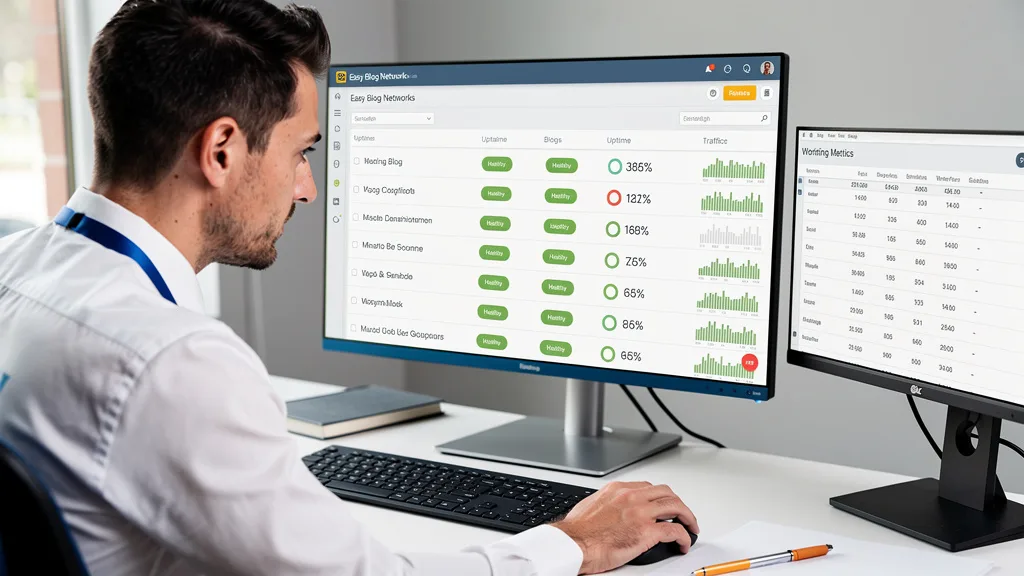
Easy Blog Networks is one of the most popular and long-standing PBN management solutions, known for its user-friendly interface and robust automation. It's designed as an all-in-one platform, handling everything from hosting deployment to blog maintenance. EBN automatically provisions your blogs on high-quality IP addresses from various premium providers like Amazon and DigitalOcean.
The platform's key strength is its simplicity. With a single click, you can deploy a new WordPress site, and EBN takes care of randomizing the theme, plugins, and server details to minimize footprints. It also includes features like automatic plugin and theme updates, daily backups, and uptime monitoring, making it an excellent choice for users who want a hands-off management experience.
Tool 2: PBN.LTD
PBN.LTD offers a comprehensive suite of services focused on footprint-free PBN hosting. One of its standout features is the integration with a domain marketplace, allowing you to source and deploy high-authority domains directly from their platform. This streamlines the initial setup process significantly.
The hosting is built on a proprietary system that ensures each of your websites is on a unique A, B, and C-Class IP address. PBN.LTD also provides free SSL certificates for all sites, which is essential for making them appear legitimate in 2026. Their platform is geared towards users who need a reliable hosting solution with the added benefit of integrated domain sourcing.
Tool 3: LaunchCDN
LaunchCDN takes a unique approach to PBN hosting by leveraging Content Delivery Networks (CDNs). Instead of placing your sites on standard hosting IPs, it uses the IPs of major CDN providers. This creates a massive, diversified IP pool that is extremely difficult to trace back to a single owner, offering one of the highest levels of footprint safety on the market. building methods.
This tool is best for advanced users who prioritize anonymity above all else. While the setup can be slightly more technical than with EBN, the security benefits are substantial. LaunchCDN effectively hides your PBN sites among millions of legitimate websites that also use CDNs, making your network exceptionally resilient to detection.
Tool 4: Bulk Buy Hosting
For those building a large network on a tighter budget, Bulk Buy Hosting offers a more economical solution. It provides individual cPanel accounts for each domain, spread across different IP addresses and data centers. This approach is more traditional than the automated platforms but can be effective if managed carefully.
The main trade-off is that management is less automated. You are responsible for setting up WordPress, installing themes and plugins, and performing updates yourself. While this requires more hands-on work, it gives you more control over the individual setup of each site. It's a solid choice for experienced users who are comfortable with cPanel and want to minimize recurring costs.
Tool 5: Self-Managed Scripts
The ultimate option for control and customization is to forgo a commercial tool altogether and build your own management system using scripts. This approach typically involves using server management platforms like RunCloud or Ploi to deploy sites on various VPS providers (Vultr, Linode, etc.) and then using custom scripts or WordPress management tools like MainWP to handle updates and posting.
This method is only recommended for highly technical users with experience in server administration. While it offers unparalleled flexibility and can be very cost-effective at scale, it also carries the highest risk. Any mistake in your setup could create a massive footprint. However, for those with the right skills, a self-managed system provides the ultimate in control and security.
How to Create a Private Blog Network
Building a private blog network from scratch is a methodical process that requires attention to detail at every step. The success of your network hinges on your ability to acquire the right assets, set them up without leaving footprints, and maintain them as legitimate-looking websites. Following a structured approach is key to creating a powerful and sustainable SEO asset.
Sourcing High-Authority Expired Domains
The first and most critical step is finding high-quality expired domains. These are domains that were previously owned but were not renewed. You are looking for domains that have a strong, clean backlink profile from authoritative sites like news outlets or educational institutions. Tools like DomCop or SpamZilla can help you scan domain auction sites and filter for domains with good metrics (e.g., high Domain Authority, Trust Flow) and no history of spam.
When evaluating a domain, always manually check its backlink profile using a tool like Ahrefs or Majestic. Look for contextual links from relevant websites. Also, use the Wayback Machine (Archive.org) to see what kind of content the site hosted in the past. Avoid domains that were previously used for spam, adult content, or other questionable activities, as they may carry a penalty.
Setting Up Diversified Hosting
Once you have your domains, you must host them in a way that avoids footprints. Never host all your PBN sites with a single company or on the same IP address. This is the most obvious red flag for search engines. Use different hosting providers, different server locations, and unique IP addresses for every site in your network.
This is where PBN management tools like Easy Blog Networks or LaunchCDN are invaluable, as they automate this diversification process. If you are setting up hosting manually, you will need to purchase separate hosting plans from multiple reputable providers. Using a mix of shared hosting, reseller accounts, and small VPS plans can help create a natural-looking hosting profile for your network.
Populating Your Network with Quality Content
An empty website with one outbound link is a clear sign of a PBN. To make your sites look legitimate, you need to populate them with unique and useful content. Each site should have a clear theme, ideally related to its original topic. You should have standard pages like 'About Us' and 'Contact', along with several blog posts. The content doesn't need to be award-winning, but it must be readable and unique.
You can write the content yourself, hire freelance writers, or use AI content generation tools, but always review it for quality. Plan to add new content periodically to keep the sites looking active. When you add a link to your money site, it should be placed naturally within a relevant article and surrounded by other non-commercial content. This makes the outbound link look like a genuine editorial citation rather than a paid placement for high authority PBN backlinks.
Key Takeaways
Successfully managing a private blog network in 2026 requires a deep understanding of the risks and a commitment to meticulous execution. The right tools can significantly improve your efficiency and safety. Here are the key points to remember:
- Control vs. Risk: PBNs offer unparalleled control over your link profile, but they violate Google's guidelines and carry the risk of severe penalties if detected.
- Footprints are Critical: The top priority in PBN management is avoiding footprints. This includes diversifying hosting, IPs, domain registrars, themes, and plugins.
- Tools Automate Safety: Modern PBN management tools like Easy Blog Networks and LaunchCDN are designed to automate footprint avoidance and streamline the management of domains, content, and links.
- Quality Matters: A successful PBN is built on high-authority expired domains and populated with unique, relevant content to appear as a network of legitimate, independent websites.
- Investment is Required: Building and maintaining a PBN requires a significant investment of both time and money. Cutting corners on domain quality, hosting, or content increases your risk of failure.
Frequently Asked Questions
Is using a PBN for link building illegal?
Using a PBN for link building is not illegal in a legal sense. You are not breaking any laws by owning multiple websites and linking them to another. However, it is a direct violation of Google's Webmaster Guidelines, which prohibit link schemes designed to manipulate search rankings.
The consequence of being caught is not legal action but rather a search engine penalty. This can range from a drop in rankings to the complete removal of your website from Google's index. Therefore, while it's not illegal, it is a high-risk SEO tactic that can have severe consequences for your business if executed improperly.
How much does it cost to build a private blog network?
The cost to build a PBN can vary dramatically, from a few hundred dollars to tens of thousands. The primary costs are expired domains, hosting, and content. High-quality expired domains can range from $80 to over $2,000 each. Hosting can cost between $2 to $10 per site per month.
Content costs also add up, whether you write it yourself, hire writers, or use AI tools. A small, 10-site network could cost $1,000 - $3,000 to set up, with ongoing monthly costs for hosting and content. Larger, more authoritative networks will have significantly higher initial and recurring expenses.
Can you use a PBN for multiple money sites?
Yes, you can use a PBN to send links to multiple money sites. However, it is crucial to do so carefully to avoid creating a footprint. If all the sites in your network link out to the same small group of money sites, it can create a detectable pattern. A safer approach is to ensure your PBN has a diverse outbound link profile.
This means linking to a variety of money sites, as well as to non-competing authority sites like Wikipedia or major news outlets. This makes the link profile of each PBN site appear more natural. Some PBN owners build separate, dedicated networks for each major money site to maximize safety and avoid cross-contamination.
What are the main alternatives to using PBNs?
There are several effective, white-hat link building strategies that serve as alternatives to PBNs. The most common is guest posting, which involves writing articles for other websites in your niche in exchange for a backlink. This method builds relationships and drives referral traffic in addition to providing SEO value.
Other alternatives include digital PR (creating newsworthy content or data that earns media coverage and links), broken link building (finding broken links on other sites and suggesting your content as a replacement), and creating high-value linkable assets like free tools, comprehensive guides, or original research that attract links naturally. Considering a safe PBN exit plan and transitioning to these methods is a common long-term strategy.
How do you know if an expired domain is safe for a PBN?
Determining if an expired domain is safe involves a thorough vetting process. First, use tools like Ahrefs or Majestic to analyze its backlink profile. Look for contextual links from real, authoritative websites. Red flags include a high volume of links from spammy directories, comment sections, or foreign-language sites.
Second, use Archive.org's Wayback Machine to review the site's history. Ensure it was a legitimate website and was never used for spam, pornography, or illegal activities. Finally, check if the domain is still indexed in Google by searching for `site:yourdomain.com`. If it's not indexed, it may have a penalty attached to it, making it unsafe to use.
Conclusion
Choosing the right private blog network tools is fundamental to executing this advanced SEO strategy safely and effectively in 2026. These platforms provide the necessary infrastructure to manage hosting, content, and links while minimizing the footprints that can lead to devastating penalties. By leveraging tools like Easy Blog Networks for automation or LaunchCDN for maximum anonymity, you can streamline your workflow and focus on building a powerful asset. Ultimately, success with PBNs comes down to meticulous planning, a commitment to quality, and the disciplined use of tools designed to protect your investment.
Ready to take control of your link building strategy but want expert guidance? Our team specializes in creating and managing powerful link acquisition campaigns that drive results. Let us help you develop a plan that aligns with your goals.
If you want help turning this into a concrete plan for your site or team, take the next step below to apply Private Blog Network Tools: 5 Best for Managing Your Network with confidence.
Ready to act on Private Blog Network Tools: 5 Best for Managing Your Network? Get a Link Plan — tell us your goal, and we will help you pick the highest-leverage next step so you are not guessing alone.