Are you considering using a Private Blog Network to boost your website's authority but worried about the risks involved? Navigating the world of PBNs can feel like walking a tightrope, where one wrong step could lead to significant search engine penalties. The key to success lies not in avoiding them altogether, but in knowing exactly how to vet potential networks for quality and safety.
A Private Blog Network checklist is an essential tool for any SEO professional looking to leverage PBNs effectively in 2026. This checklist provides a structured framework for evaluating the critical components of a PBN, from the quality of its domains and hosting infrastructure to the content published on its sites. Following a rigorous vetting process helps you identify powerful, safe networks and avoid those that could harm your search engine rankings.
A Private Blog Network, commonly known as a PBN, is a collection of authoritative websites that you control, used for the primary purpose of building backlinks to your main website (often called the "money site"). These networks are typically built using expired or auctioned domains that already have established authority, a strong backlink profile, and trust from search engines. The core idea is to leverage this pre-existing authority to pass link equity to your money site, thereby improving its search engine optimization and rankings.

Unlike public blog networks, which are often easily identifiable and penalized by search engines, a PBN is designed to be discreet. Each website within the network is intended to look and function like a legitimate, standalone blog with unique content, different owners, and separate hosting. This careful construction is meant to eliminate any obvious footprints that could connect the sites to each other or back to you, making the links appear natural and organic to search engine algorithms. However, this strategy is considered a grey-hat SEO tactic, as it attempts to manipulate search rankings.
In the competitive digital landscape of 2026, high-quality backlinks remain a cornerstone of effective search engine optimization. While many strategies focus on earning links organically, PBNs offer a method for creating and controlling a portion of your backlink profile. When managed correctly, a PBN can provide a reliable source of powerful, niche-relevant links that can be difficult to acquire through traditional outreach or guest posting. This level of control allows you to direct link equity precisely where it's needed most, accelerating ranking improvements for competitive keywords.
The effectiveness of a PBN, however, is a double-edged sword. Search engines like Google have become increasingly sophisticated at detecting and penalizing manipulative link schemes. This is precisely why a meticulous vetting process is more critical than ever. A well-managed, high-quality network can provide a significant competitive advantage, while a poorly constructed one can lead to de-indexing and a complete loss of organic traffic. The difference between success and failure lies in your ability to ensure every site in the network is genuinely authoritative and leaves no detectable footprint.
"In 2026, the strategic use of a Private Blog Network isn't about building a massive quantity of links. It's about creating a small, powerful, and undetectable source of authority. Quality, diversity, and caution are the principles that separate a successful PBN strategy from a catastrophic one."
How to Get Started with Private Blog Network
Getting started with a PBN requires a systematic approach to acquiring and vetting domains. The foundation of a powerful network is built on domains that have a clean history and genuine authority. Before you purchase any domain or link from a network, you must perform due diligence using a comprehensive checklist. This process ensures you are investing in assets that will help, not harm, your SEO efforts.
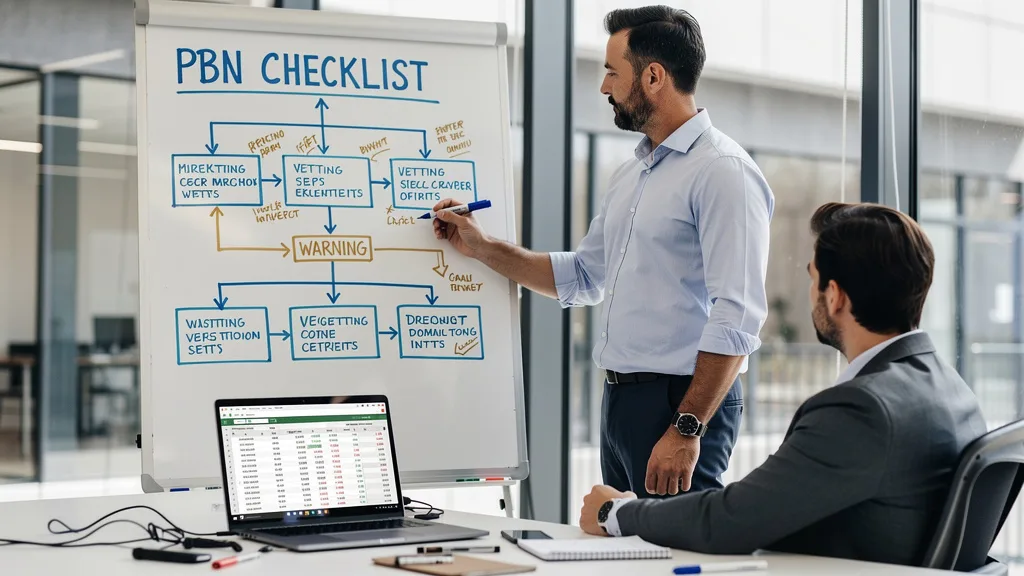
The following table outlines the 10 essential points to vet before buying into a PBN or acquiring a domain for your own network. Each point is critical for assessing the domain's quality, safety, and potential to pass value. Neglecting even one of these areas can expose your money site to unnecessary risk. If you're looking to acquire domains, understanding how to buy aged domains from an SEO marketplace is a crucial first step in this process.
| Checklist Point | What to Look For | Why It Matters |
|---|---|---|
| 1. Domain Authority (DA/DR) | Check metrics from tools like Ahrefs (DR) or Moz (DA). Look for scores of 20+ as a baseline. | Higher authority scores indicate a stronger backlink profile and more link equity to pass. |
| 2. Domain History | Use the Wayback Machine (Archive.org) to check past content. Ensure it was never used for spam, adult content, or anything unrelated to your niche. | A clean history ensures you are not inheriting previous penalties or a bad reputation. |
| 3. Backlink Profile | Manually review the top backlinks. They should come from real, authoritative sites, not other PBNs or spammy directories. | The quality of inbound links determines the domain's true authority. A spammy profile is a major red flag. |
| 4. Niche Relevance | Check the domain's past content and backlink anchors. The more relevant to your money site's niche, the better. | Niche-relevant links are more powerful and appear more natural to search engines. |
| 5. Hosting & IP Footprint | Ensure the PBN uses different hosting providers and unique C-Class IPs. Avoid sites hosted on known 'SEO hosting'. | A diverse hosting footprint prevents search engines from easily connecting the sites in the network. |
| 6. Content Quality | The site should have unique, well-written content. Avoid sites with spun articles or thin content. | High-quality content is a sign of a legitimate website, reducing the risk of being flagged as part of a link scheme. |
| 7. Indexing Status | Perform a 'site:domain.com' search in Google. If the site is not indexed, it may be penalized. | A de-indexed site has zero value and indicates a severe penalty from Google. |
| 8. Website Design & Theme | Each site in the network should have a unique design, theme, and logo. | Identical designs are a massive footprint that can get the entire network de-indexed. |
| 9. Outbound Link Profile | Check who the site is linking to. Avoid sites that link out to hundreds of other pages, especially in unrelated niches. | Too many outbound links dilute the authority passed to your site and can signal a low-quality link farm. |
| 10. Ownership History (Whois) | While often private, check for any public history. Ensure it hasn't been passed around between known spammers. | A stable ownership history is a positive sign, while frequent changes can be a red flag for churn-and-burn domains. |
Best Practices for Private Blog Network
Once you have vetted and acquired your domains, managing the network properly is just as important as the initial selection process. Adhering to best practices minimizes risk and maximizes the SEO benefit of your PBN. The overarching goal is to make every site in your network appear as a completely independent and legitimate entity. This involves careful attention to detail across hosting, content, and linking strategies.
Following these guidelines will help you build a sustainable and effective network that supports your long-term SEO goals without raising red flags with search engines. Remember that patience and a focus on quality are paramount.
- Diversify Everything: Use different domain registrars, a variety of reputable hosting companies (avoiding known 'SEO hosting'), and unique WordPress themes and plugins for each site. This is the most critical step in avoiding a footprint.
- Create High-Quality Content: Publish unique, readable, and genuinely useful content on each blog. The articles should be relevant to the blog's niche. A good PBN site should look like a real blog that someone would actually want to read.
- Limit Outbound Links: Do not link out to your money site from every single post. Place links naturally within the content and limit each page to only 1-2 outbound authority links, including the one to your target site.
- Vary Anchor Text: Use a diverse mix of anchor text when linking to your money site. Over-optimizing with exact match keywords is a classic mistake that search engines easily detect. Use branded, naked URL, and partial match anchors.
- Build Slowly and Naturally: Do not build all your sites or links at once. A natural growth pattern is key. Add content and links gradually over time, mimicking the pace of a real, organically growing website. To ensure the links you build are powerful, you must know how to verify high DR backlinks for quality.
Common Mistakes to Avoid
The path to leveraging PBNs is fraught with potential pitfalls. Many of the horror stories you hear about penalties and de-indexed sites stem from common, avoidable mistakes. Understanding these errors is the first step toward building a network that is both powerful and resilient. The primary mistake is leaving a footprint, which is any piece of data that connects the websites in your network to each other.
Avoiding these common errors will drastically reduce the risk associated with your PBN. The guiding principle should always be: "What would a real, independent website owner do?" If your actions deviate from that, you are likely creating a footprint that could be detected. For more information on risks, you can review Google's official stance on link spam policies, which explicitly warns against these practices.
- Using the Same Hosting or IP Range: Hosting all your PBN sites with one company, especially on the same server or IP block, is the easiest footprint for search engines to find.
- Public Whois Information: Never use the same registration information (name, email, address) for your PBN domains. Always use a Whois privacy service.
- Interlinking PBN Sites: Never link one site in your PBN to another site in the same network. This creates a clear, interconnected pattern that screams "link network."
- Using Spun or AI-Generated Content: Low-quality, unedited content is a major red flag. Each post should be unique and provide some level of value to a human reader.
- Linking to Only One Money Site: If your entire network of 20 blogs only links out to one single website, it's an unnatural pattern. Link out to other non-competing authority sites to make the outbound link profile look more natural.
- Using the Same Analytics or Webmaster Tools ID: Never use the same Google Analytics, Search Console, or other tracking code across your PBN sites. Each site must be treated as a separate property.
Key Takeaways
Navigating the complexities of Private Blog Networks requires a deep understanding of both the potential rewards and the significant risks. A disciplined, checklist-driven approach is non-negotiable for success in 2026. Here are the most important points to remember:
- Vetting is Paramount: The success of your PBN strategy hinges on the quality of the domains you use. Always use a comprehensive checklist to vet domain history, backlink profiles, and indexing status before purchasing.
- Quality Over Quantity: A small network of 10 high-authority, clean domains is far more powerful and safer than a network of 100 low-quality, spammy ones.
- No Footprints Allowed: Your primary goal is to make each site in the network appear completely independent. This means diversifying hosting, themes, registrars, and content.
- Content Matters: A PBN site should look and read like a real blog. Invest in unique, quality content to enhance credibility and reduce risk.
- PBNs are a Grey-Hat Tactic: Always be aware of the inherent risks. This is not a set-and-forget strategy; it requires ongoing management and vigilance to remain effective and avoid penalties. Buying high authority PBN backlinks from a trusted source can mitigate some of these management challenges.
Frequently Asked Questions
How do you SEO your blog?
To SEO your blog, focus on three core areas. First is on-page SEO, which involves researching relevant keywords and naturally incorporating them into your titles, headings, and body content. Second is off-page SEO, primarily focused on building high-quality backlinks from other reputable websites to signal authority to search engines.
The third area is technical SEO, which ensures your blog is fast, mobile-friendly, and easy for search engine crawlers to index. Consistently publishing high-quality, valuable content that answers your audience's questions is the foundation that ties all these efforts together for long-term success.
What are the key qualities of a good blog post?
A good blog post is, above all, valuable to the reader. It should be well-researched, accurate, and provide comprehensive information that fully answers a specific question or solves a problem. Structurally, it needs to be easy to read, using clear headings, short paragraphs, bullet points, and images to break up the text. link equity.
Furthermore, strong blog posts are original and offer a unique perspective or deeper insights than other content on the same topic. Finally, they should be optimized for search engines with relevant keywords but written for humans first, maintaining a natural and engaging tone.
What are the basic steps to starting a blog?
Starting a blog involves a few key steps. First, choose a specific niche or topic you are passionate and knowledgeable about. Next, select a memorable domain name that reflects your niche and purchase a reliable web hosting plan. After that, install a content management system (CMS) like WordPress, which is user-friendly and highly customizable.
Once the technical setup is complete, customize your blog's design with a theme and begin creating your first few pieces of high-quality content. The final step is to develop a promotion strategy to attract your first readers, which can include sharing on social media, basic SEO, and engaging with online communities in your niche.
Conclusion
Successfully using a Private Blog Network in 2026 is an exercise in diligence, quality control, and risk management. By using a thorough Private Blog Network checklist, you can systematically vet potential domains and service providers, ensuring you invest only in high-quality assets that will positively impact your rankings. This guide provides the framework for making informed decisions, helping you avoid common pitfalls and build a powerful, sustainable SEO advantage.
Ready to leverage the power of high-authority links without the guesswork? Our team specializes in building and managing safe, effective link strategies tailored to your goals. Let us help you develop a plan that drives real results. Get a Link Plan today and discover how we can elevate your SEO performance.